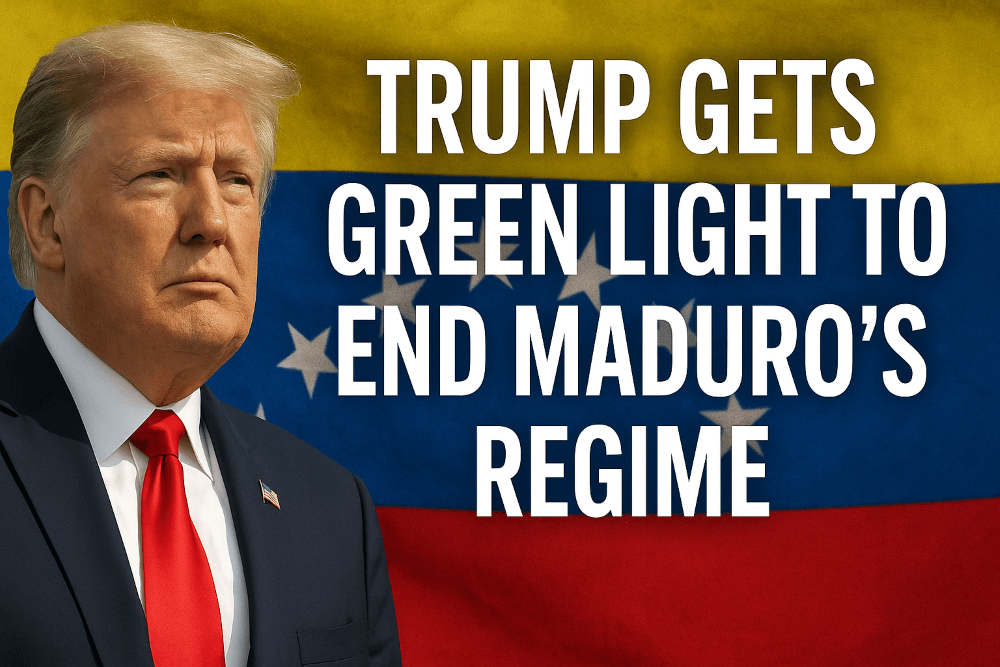
On November 6, 2025, something extraordinary happened in Washington. In a 49–51 vote, the U.S. Senate didn’t trip over its own feet for once. Instead, it cleared a major roadblock that stood between millions of suffering Venezuelans and the possibility of real change.
A bipartisan resolution tried to force President Trump to get congressional permission before taking military action against Nicolás Maduro’s criminal regime. The Senate shot it down. Good. That vote wasn’t a procedural hiccup — it was a long-overdue acknowledgment that the Venezuelan nightmare won’t end through “dialogue,” wishful thinking, or another round of sanctions no one takes seriously.
It was a green light for leadership.
Let’s call things what they are
Nicolás Maduro is not a president. He’s a dictator who stole the 2024 election, unleashed death squads on protesters, and turned one of the richest countries in Latin America into a dystopian wasteland where 96% of families live in poverty and children go to bed hungry.
This man didn’t “fail” Venezuela. He looted it.
So the Senate removing this artificial constraint is more than procedural housekeeping. It means that if President Trump chooses to act, he can do so with full constitutional authority and the moral support of an entire region begging for relief.
And frankly, it’s about time.
Why Military Action Isn’t Warmongering — It’s Long-Overdue Surgery
1. This is not a war. This is a liberation.
People clutch their pearls at the word “military,” but let’s be honest: Maduro’s regime is a narcoterrorist cartel wrapped in a presidential sash.
They’ve:
- Partnered with FARC and ELN guerrillas
- Turned Venezuela into a cocaine conveyor belt
- Welcomed Russian warships and Iranian militias to the Caribbean
Removing Maduro isn’t an “invasion.” It’s a cleanup operation. A necessary one.
2. Venezuelans have been screaming for help
Over 7.7 million citizens have fled. This is one of the largest refugee crises on the planet—bigger than most wars.
Inside the country:
- Hospitals are empty
- Schools are abandoned
- Blackouts last days
- One in three children is chronically malnourished
A U.S.-led intervention, backed by Brazil, Colombia, and the OAS, could stop the bleeding in weeks, not decades.
3. Free Venezuela = Prosperous Venezuela
Venezuela isn’t broken. It’s being held hostage.
Before the Chávez-Maduro era:
- It had the highest GDP per capita in Latin America
- A strong middle class
- Multinationals pouring in billions
With Maduro gone:
- Oil output could jump from 700,000 to 3 million barrels/day
- $50 billion in frozen assets could go to rebuilding schools and hospitals
- Trade with North America and Europe would explode
Imagine: Venezuelan coffee in every supermarket, legal gold mines instead of child-slave mining pits, ports full of ships — not Russian frigates.
4. A stable Venezuela stabilizes the Americas
Fix Venezuela and:
- Refugees go home
- Drug routes collapse
- U.S. cities see less gang violence
- Russian and Chinese influence disappears from the hemisphere
Call it Plan Colombia 2.0 — only faster, and with a much happier ending.
The Senate Didn’t Vote for War — It Voted for Hope
The 51 senators who rejected the resolution didn’t give Trump a blank check. They gave Venezuela a fighting chance.
They refused to tie the president’s hands while Maduro’s security forces torture teenagers for waving the old seven-star flag. This wasn’t a partisan stunt. It was a recognition that sometimes compassion requires decisiveness, not endless debate.
Venezuela’s Comeback Starts Now
Picture it:
- A free election in 2026
- Kids in classrooms instead of digging through trash
- Venezuelan ports full of commerce, not foreign militaries
- Families returning home instead of fleeing
November 6 wasn’t the start of a war.
It was the first real step toward Venezuela’s rebirth.
For that, every democracy in the Americas should be saying: finally.