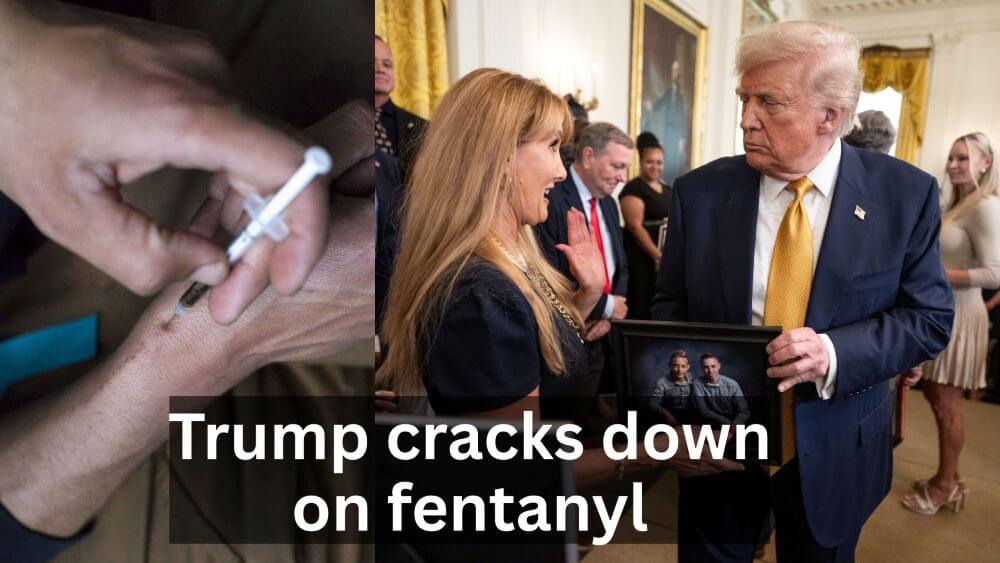
The opioid crisis continues to ravage communities across North America, leaving behind broken families, devastated neighborhoods, and an overwhelmed healthcare system. In 2022 alone, over 107,000 people in the United States died of drug overdoses—many of them involving synthetic opioids like illicitly manufactured fentanyl.
In response to this ongoing tragedy, President Donald Trump has signed the HALT Fentanyl Act into law—a legislative move aimed at closing legal loopholes exploited by drug traffickers and strengthening penalties for those fueling the crisis.
What Is the HALT Fentanyl Act?
The HALT Fentanyl Act (short for Halt All Lethal Trafficking of Fentanyl Act) permanently classifies all fentanyl-related substances as Schedule I drugs, the same category as heroin, LSD, and ecstasy. This classification gives law enforcement and prosecutors stronger tools to go after those who manufacture, traffic, and distribute synthetic opioids.
Until now, drug cartels—most notably Mexico’s Sinaloa Cartel—have been exploiting chemical loopholes, tweaking fentanyl molecules to create new variants that technically fall outside the reach of current law. This act changes that by broadly covering all fentanyl-related substances, even those not yet invented.
A Presidential Act of Urgency
By signing this act, President Trump is sending a clear message: those who endanger public health through the sale and distribution of fentanyl analogues will face serious consequences. This law not only saves lives but puts pressure on criminal networks that profit from human misery.
Critics of the previous legal framework argued that enforcement agencies were forced to play “chemical whack-a-mole,” with new, slightly altered versions of fentanyl entering the market as soon as others were banned. The HALT Fentanyl Act provides permanence and clarity to the law, giving prosecutors a stronger foundation to build cases and judges more leeway in sentencing.
Why This Matters
- Public Health: With tens of thousands of deaths attributed to fentanyl annually, this act is a meaningful attempt to reduce supply and prevent overdose deaths.
- Law Enforcement: The broader Schedule I classification removes ambiguity, allowing officers and prosecutors to act faster and more decisively.
- Community Protection: Keeping these drugs off the street helps protect vulnerable populations—especially youth and those already struggling with addiction.
Balancing Justice and Compassion
While the HALT Fentanyl Act is a strong measure against traffickers and suppliers, it’s worth noting that solving the opioid crisis also requires comprehensive treatment and prevention strategies. Criminal penalties are necessary for high-level dealers, but addicted individuals need access to rehabilitation, mental health services, and community support systems.
This act is one piece of a larger puzzle—and President Trump’s leadership in signing it signals a willingness to act decisively in the face of a growing crisis.
Final Thoughts
Public policy often involves trade-offs, but when it comes to fentanyl, the stakes are too high for inaction. The HALT Fentanyl Act is a heroic move to stop the bleeding—literally. It acknowledges the shifting strategies of international drug traffickers and brings U.S. law in line with the harsh realities of a modern drug war.
If implemented effectively, this act could save thousands of lives, remove dangerous substances from the streets, and bring long-overdue justice to those who profit from pain. That’s a step in the right direction—one our communities sorely need.
Other Law Posts