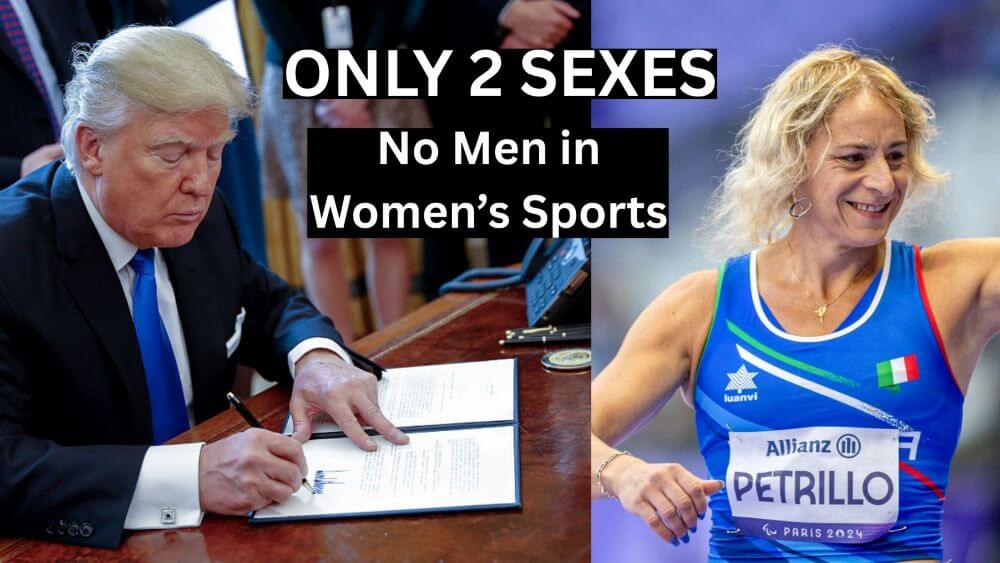
In a move that has overwhelming support by over 80% of the nation, the President of the United States signed an executive order (EO) reinforcing the binary definition of sex—male and female—as the guiding standard for federal policy. This EO not only establishes a federal stance but also directs government agencies, schools, and institutions receiving federal funds to comply—or face lawsuits, prosecution, or the loss of funding.
What the Executive Order Says
At its core, the EO mandates that:
- There are only two federally recognized sexes: male and female.
- Biological males are barred from participating in female-only sports.
- Sex-segregated spaces—like locker rooms, bathrooms, and shelters—must follow biological sex designations, not gender identity.
- States or institutions that do not comply risk legal and financial consequences.
According to the administration, this move is designed to protect the integrity of women’s sports and safeguard the privacy and safety of female spaces.
The Pushback from States
Despite the federal order, some states—such as Maine—have pushed back, refusing to enforce the policy. In Maine, Governor Janet Mills has taken a stand against the EO, stating that her administration will not implement policies they believe discriminate against transgender individuals.
This has led to emotional appeals from young female athletes who feel that their opportunities and fairness in sports are being eroded. Some have gone as far as publicly pleading with their governors to enforce sex-based sports policies, citing concerns over safety, fairness, and lost scholarships.
Enforcement and Legal Ramifications
The Department of Justice has begun enforcing the EO aggressively. Non-compliance may trigger lawsuits, federal investigations, or withdrawal of funding for programs and institutions. The administration’s message is clear: if you receive federal dollars, you must follow federal rules.
The Cultural and Political Divide
This executive order has intensified the national debate on sex, gender, and rights. Supporters see it as a return to common sense and a necessary correction to what they view as overreach in gender ideology. Critics see it as a discriminatory rollback of transgender rights, warning it could create a chilling effect for already vulnerable groups.
As someone who writes frequently about fairness, values, and personal empowerment, I see this as more than a political decision. It’s a reflection of the wider cultural rift in America—between two visions of rights, identity, and equality.
What Comes Next?
This debate is far from over. Lawsuits will likely wind their way through the courts, and the question of whether federal authority can override state policy will be tested yet again. Meanwhile, young athletes, educators, and parents are caught in the crossfire of a political and social battle with real-world consequences.
As citizens, we must ask hard questions:
- What does fairness mean in sports?
- Who gets to define sex and gender in law?
- Should federal funding come with ideological strings attached?
Regardless of where one stands on the issue, this executive order is a bold move that will shape the legal and cultural landscape of the United States for years to come.
Previous Politics posts