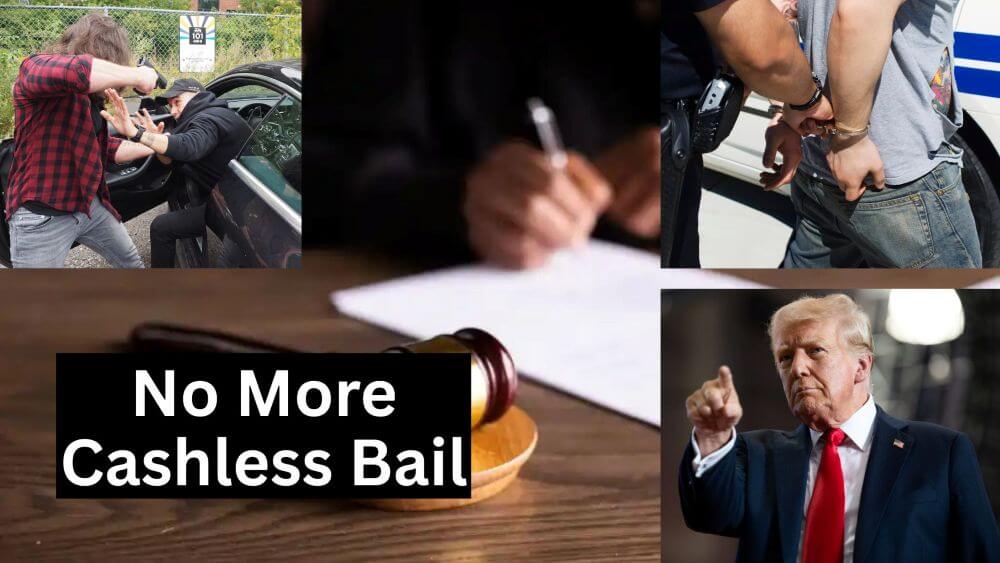
Washington, D.C. has long been criticized for its struggles with crime, particularly violent crime. Despite decades of policy experiments, the nation’s capital continues to experience levels of violence higher than the national average.
This week, President Donald Trump took a bold step to change that trajectory. With the stroke of a pen, he signed an executive order to end cashless bail in Washington, D.C. — a policy shift that has the potential to reshape the conversation on public safety, not only in the capital but across the country.
Why Cashless Bail Failed
Cashless bail was introduced with good intentions: to ensure that people who couldn’t afford bail weren’t unfairly stuck in jail simply because of their financial circumstances. In theory, it was about fairness. In practice, it became a revolving door.
Take the example of one armed carjacker in D.C. who openly admitted he had been arrested and released six times for the very same crime. Each release gave him another opportunity to reoffend, undermining the community’s sense of safety and mocking the rule of law.
When violent offenders face no real consequences, citizens pay the price. The residents of D.C. have lived with this reality for years — a reality of fear, frustration, and distrust in a justice system that appears to prioritize the offender over the victim.
Trump’s “Law and Order” Agenda
Trump’s executive order does two key things:
- Ends cashless bail in Washington, D.C. — ensuring that violent offenders face detention before trial rather than immediate release.
- Threatens to withhold federal funds from jurisdictions that continue to support cashless bail policies — sending a clear message nationwide.
Jeanine Pirro, former judge and now U.S. Attorney for D.C., has been vocal about the dangers of cashless bail. She put it plainly: allowing violent criminals to walk free has been one of the biggest contributors to repeat offenses and public safety concerns.
This policy shift is part of Trump’s broader push to restore law and order in D.C. — including deploying the National Guard, federalizing certain policing functions, and implementing the Secure Our Streets Act, which mandates pretrial detention for repeat violent offenders.
Why This Matters
Ending cashless bail is not about punishing poverty; it’s about protecting communities. There’s a difference between someone arrested for a minor, nonviolent offense and someone accused of carjacking at gunpoint.
The former might reasonably be considered for supervised release. The latter should not be back on the streets within hours. The failure to distinguish between these realities is what made cashless bail so dangerous.
By drawing a hard line, Trump is sending a signal that public safety comes first. And in cities like Washington, D.C., where residents have grown weary of the revolving door of justice, this message may resonate deeply.
Looking Ahead
Crime reduction is not a one-step process. But addressing the failures of cashless bail is an important part of restoring accountability to the justice system. For too long, D.C. residents have been told to tolerate high levels of crime as the cost of “reform.”
Now, with Trump’s crackdown, there is hope that the balance may finally shift — from leniency for offenders to justice and security for ordinary citizens.
In a city that represents the seat of American democracy, safety should not be a luxury. It should be the baseline.
Other Law Posts