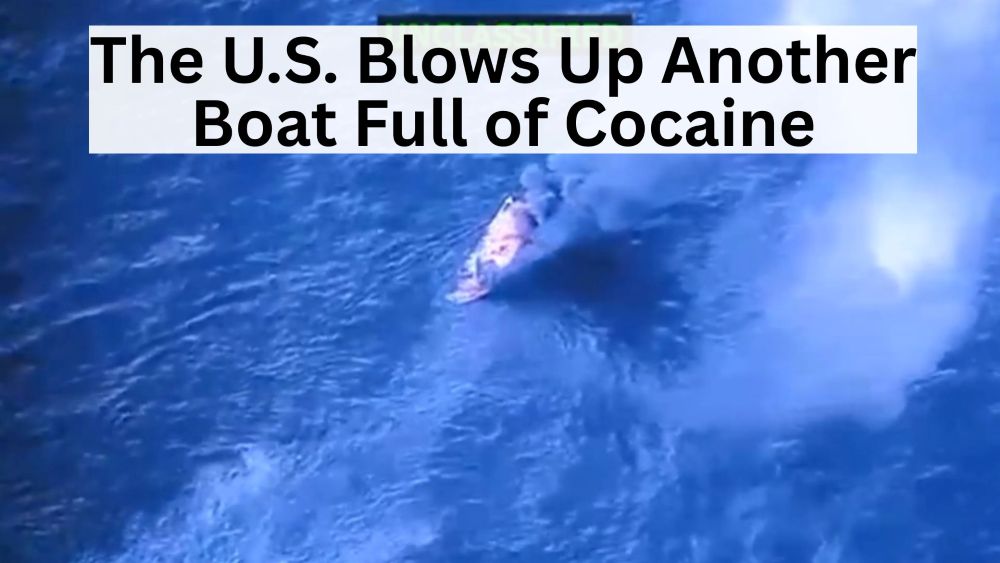
This week’s announcement from Secretary of War Pete Hegseth — that, on President Trump’s orders, U.S. forces carried out a “lethal, kinetic strike” on a narco-trafficking vessel in international waters off Venezuela — is the clearest sign yet that the administration has changed the rules of the game. Hegseth said four people aboard the boat were killed and that U.S. intelligence “without a doubt” confirmed the craft was carrying narcotics bound for the United States. X (formerly Twitter)+1
Why this matters: drug overdoses remain a national catastrophe. The Centers for Disease Control reports roughly 105,000 drug-overdose deaths in 2023 — a human toll that gives every interdiction and every policy shift immense moral weight. Stopping fentanyl and other deadly substances at sea and at source is, plainly, a life-saving mission. CDC+1
A change in behavior
For years, traffickers relied on land routes and sprawling distribution networks through which illicit substances made their way north. Faced with tighter controls on land and at ports, cartels adapted — moving to faster boats and maritime routes that make interdiction harder. The administration’s decision to treat major trafficking networks as organized, armed threats and to act decisively in international waters forces traffickers to rethink those tactics. Recent footage and multiple announced strikes indicate those tactics are already changing — some channels are disrupted, smugglers are dispersing, and others are paying the ultimate price. TIME+1
Deterrence through decisive action
Deterrence isn’t built on press releases alone; it’s built on consequences. By publicly demonstrating that the U.S. will locate, engage, and destroy vessels carrying large loads of narcotics — and by tying those operations directly to presidential orders — Washington sends a powerful signal up and down the trafficking chain: high-risk maritime shipments are no longer a low-cost option. That raises costs for cartels and reduces the reliability of their supply lines to U.S. markets. The short-term effect is disruption; the medium-term effect, if sustained, is to force adaptation or attrition among the most dangerous networks. USNI News+1
Yes, there are serious legal and diplomatic questions — and those deserve scrutiny. Critics argue the strikes risk bypassing due process and raising geopolitical tensions. Responsible policy, though, balances legal safeguards with the urgent need to protect American lives. The administration is making the argument that we face an armed, transnational threat whose trafficking activities directly drive a domestic death toll measured in tens of thousands; that case has persuaded commanders to treat certain cartel operations as military targets. Reporters and analysts are rightly watching for transparency about intelligence and collateral risk; transparency will strengthen public confidence in these operations. The Daily Beast+1
What success looks like
Success won’t be a single headline. It shows up as fewer massive maritime runs, fewer fentanyl shipments that reach American streets, shrinking revenues for the cartel nodes that rely on sea smuggling, and — most importantly — fewer overdose deaths. If decisive action at sea is part of an integrated approach (law enforcement on land, diplomatic pressure, international cooperation, and robust treatment and harm-reduction programs at home), it can change the calculus for criminal groups while protecting American communities. The early signals — multiple strikes, documented disruptions, and trafficking networks visibly altering tactics — suggest that is happening now. Al Jazeera+1
Conclusion
We should say it plainly: the administration has chosen a different path — one of forceful interdiction combined with political will — and that posture is producing tangible effects. For a nation confronting a drug overdose crisis that claims more than 100,000 lives a year, proactive deterrence matters. That doesn’t absolve the government of accountability or the need for careful oversight. But it does deserve recognition when it reduces the flow of poison toward our families and neighborhoods.
Other Law Posts