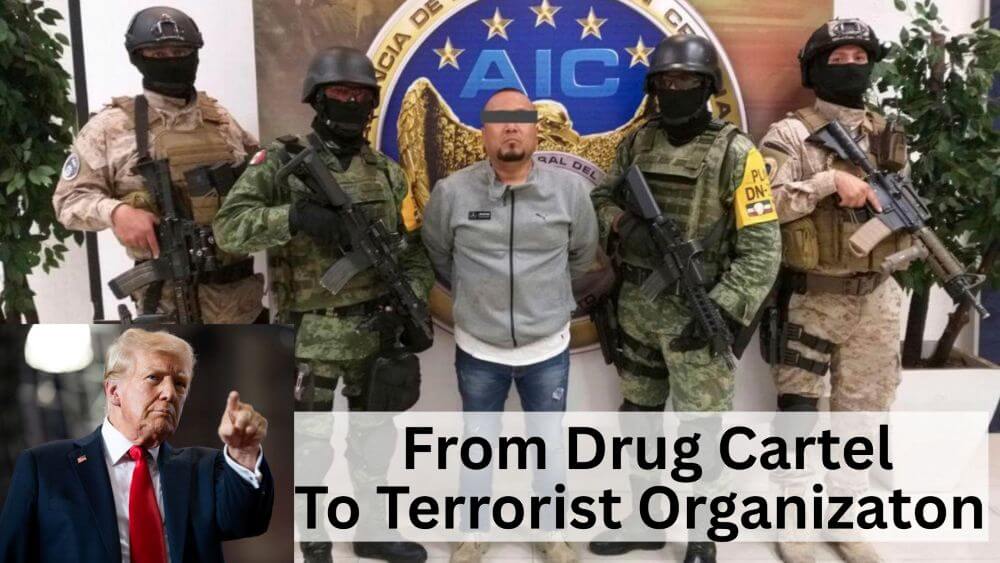
One of the most persistent problems facing the United States today is the flow of illegal drugs into the country. The consequences are everywhere: tens of thousands of overdose deaths every year, rising crime rates, homelessness linked to addiction, and billions in economic costs from lost productivity and public health expenses. It’s a crisis that doesn’t just hurt individuals—it erodes entire communities.
For years, administrations have promised to take on the drug cartels. But now, President Donald Trump appears to be escalating that fight in a way that could mark a turning point.
According to The Wall Street Journal, President Trump has ordered the Pentagon to develop military options against drug cartels that have been designated as foreign terrorist organizations. This designation opens the door for a much more aggressive U.S. response, treating cartels not as local criminals, but as threats to national security.
What’s on the Table
A senior U.S. official outlined several strategies under consideration:
- Special forces operations targeting cartel leadership and infrastructure.
- Intelligence support to identify networks and smuggling routes.
- Precision targeting of drug labs, weapons caches, and smuggling hubs.
- Coordination with Mexico and Central/South American partners to conduct joint operations.
President Trump reportedly pressed Mexican President Claudia Sheinbaum in an April phone call to allow greater U.S. military involvement against the cartels. An agreement for intelligence sharing and enforcement coordination is now in the works, with Sheinbaum expecting it to be signed soon.
The Call for Urgency
Several prominent voices have stressed the need for fast, decisive action:
- Scott Jennings: “What would be best is if Mexico would work with the United States to help take these people out as quickly and as fast as possible. It’s not good for them to be warehousing these people and doing nothing about it, and it’s not good for us to have it coming into the country.”
- Senator Marco Rubio: “We cannot continue to just treat these guys as local street gangs. They have weaponry that looks like what terrorists, in some cases armies, have. They control territory in many cases. It’s no longer a law enforcement issue. It becomes a national security issue.”
- Secretary of Defense Pete Hegseth: “All options will be on the table” now that cartels are officially classified as foreign terrorist organizations.
Why This Matters for U.S. Society and the Economy
If successful, this strategy could produce far-reaching benefits:
- Fewer overdose deaths — By disrupting supply chains, fewer drugs reach U.S. streets.
- Lower crime rates — With less drug money circulating, gangs and organized crime lose power.
- Reduced homelessness — Addiction is a major driver of homelessness; cutting supply could slow the crisis.
- Economic relief — Fewer addiction-related health emergencies and incarcerations mean less strain on public resources.
A High-Stakes Gamble
Of course, this approach is not without risks. Cross-border military action could strain U.S.-Mexico relations, and cartels are notoriously adaptive. The question is whether a military-driven strategy—something past administrations have avoided—can succeed where conventional law enforcement has struggled.
Still, President Trump’s decision signals a major shift: treating the cartel problem not as a criminal justice issue, but as a matter of national security. If it works, it could save lives, reduce crime, and help rebuild communities devastated by drugs. If it fails, the cost—in both money and lives—could be high.
Either way, the United States is entering a new phase in the war on drugs. And for many Americans living with the daily consequences of addiction, the hope is that this time, the fight will finally turn the tide.
Other Law Posts