Every year, thousands of college graduates receive what sounds like excellent career advice:
“Don’t settle for the first job you find. Take your time. Find something you’re truly passionate about.”
On the surface, it sounds reasonable. After all, nobody spends years studying just to end up working in a job unrelated to their degree. We all want meaningful work, a fulfilling career, and a sense that our education was worth the investment.
But there is a problem with this advice.
For many graduates, waiting for the perfect opportunity is a luxury they simply cannot afford.
Student loan payments begin to arrive. Rent is due every month. Groceries need to be purchased. Cell phone bills, transportation costs, insurance, and countless other expenses don’t pause while someone searches for their dream job.
The reality is that most people need income first and career fulfillment second.
There Is Dignity in Any Honest Work
A retail job may not be the ideal launch pad for a career in engineering. Working in a restaurant may not seem like a direct path to becoming an accountant, lawyer, or marketing executive.
But these jobs accomplish something important.
They put money in your pocket.
They reduce financial stress.
They allow you to pay your bills and maintain your independence.
They also provide something many new graduates underestimate: experience.
Employers often say they want candidates with strong communication skills, reliability, customer service experience, teamwork, problem-solving abilities, and the ability to handle pressure. Retail stores, restaurants, warehouses, and service jobs teach all of these skills.
Someone who has worked a busy Saturday shift in a restaurant understands responsibility in a way that cannot be learned in a classroom.
My Own Experience
As an immigrant, I faced challenges that many native-born graduates never have to consider.
English was not my first language. Neither was French.
When I graduated, I wanted a professional job related to my field of study. Unfortunately, wanting something and getting it are two different things.
I didn’t have the financial luxury to sit at home waiting for the perfect opportunity to appear.
So I worked.
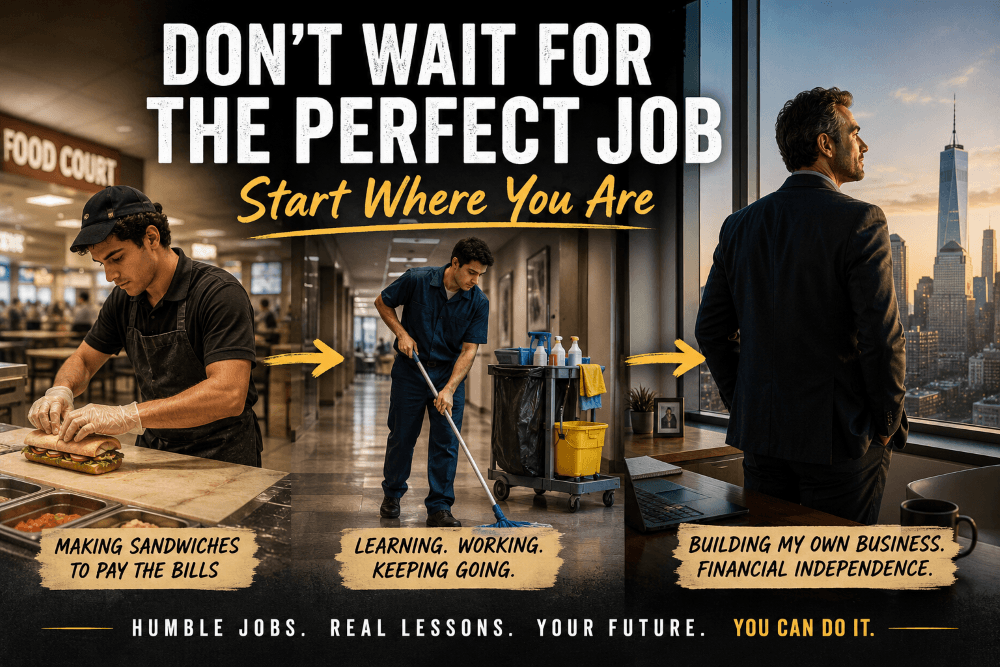
I made sandwiches in a shopping mall.
I worked as a janitor.
I worked as a busboy.
None of these jobs appeared on the career plan I imagined while sitting in college classrooms.
But those jobs paid the rent.
They put food on the table.
Most importantly, they relieved the financial pressure that would have otherwise consumed my attention and energy.
When your basic needs are covered, you can think more clearly about the future.
The Unexpected Lessons
Looking back, those jobs taught me lessons that had nothing to do with cleaning floors or serving customers.
I learned to take risks.
I learned to depend on myself.
I learned that nobody was coming to rescue me.
I learned that progress often comes from action rather than planning.
Most importantly, I learned that we have more control over our destiny than we sometimes believe.
Eventually, I started my own business.
The path was not straight. It was not elegant. It certainly wasn’t what career counselors would have predicted.
But it worked.
Fifteen years after graduation, I became financially independent.
The Myth of the Perfect Beginning
Many people imagine successful careers as a straight line: graduate, get a great job, receive promotions, build wealth, and retire comfortably.
Real life rarely works that way.
Careers are messy.
People change industries.
Businesses fail.
New opportunities emerge unexpectedly.
Skills acquired in one job become valuable in another.
The busboy becomes a business owner.
The retail worker becomes a manager.
The janitor develops the discipline and resilience that later lead to entrepreneurial success.
The first job is rarely the final destination.
Start Moving
Some graduates come from families that can support them while they search for the perfect opportunity. If someone has that option, there is nothing wrong with taking advantage of it.
But most people don’t have that luxury.
For them, the best strategy is often the simplest one: get started.
Take the job.
Earn some money.
Build experience.
Develop skills.
Meet people.
Learn how the world works outside the classroom.
Then continue searching for better opportunities while you are already moving forward.
Momentum matters.
A small step in the wrong direction is often easier to correct than standing still waiting for the perfect path to reveal itself.
Life has a funny way of working out.
The job you take today may not be the job you want next year. But it might provide the income, confidence, skills, and connections that lead you somewhere far better than you can currently imagine.
The perfect job may never arrive.
The next opportunity, however, is often available right now.
Frequently Asked Questions
Is it better to take any job after graduation or wait for a job in your field?
For most graduates, taking a job sooner rather than later can be beneficial. Earning an income reduces financial stress, allows bills to be paid, and helps build workplace experience while continuing the search for opportunities in your chosen field.
Do retail and restaurant jobs help build a professional career?
Yes. Retail and restaurant jobs help develop valuable skills such as communication, customer service, teamwork, time management, problem-solving, and reliability. These are qualities that employers in almost every industry value.
Can working outside your field hurt your long-term career prospects?
Not necessarily. Many successful professionals spend time working outside their field before finding their career path. What matters most is continuing to learn, build skills, and pursue better opportunities over time.
What is the biggest mistake new graduates make when looking for work?
One common mistake is waiting too long for the “perfect” job while financial pressures mount. Taking a reasonable job can provide income, experience, and momentum while allowing graduates to continue searching for better opportunities.
Other Personal Development Posts