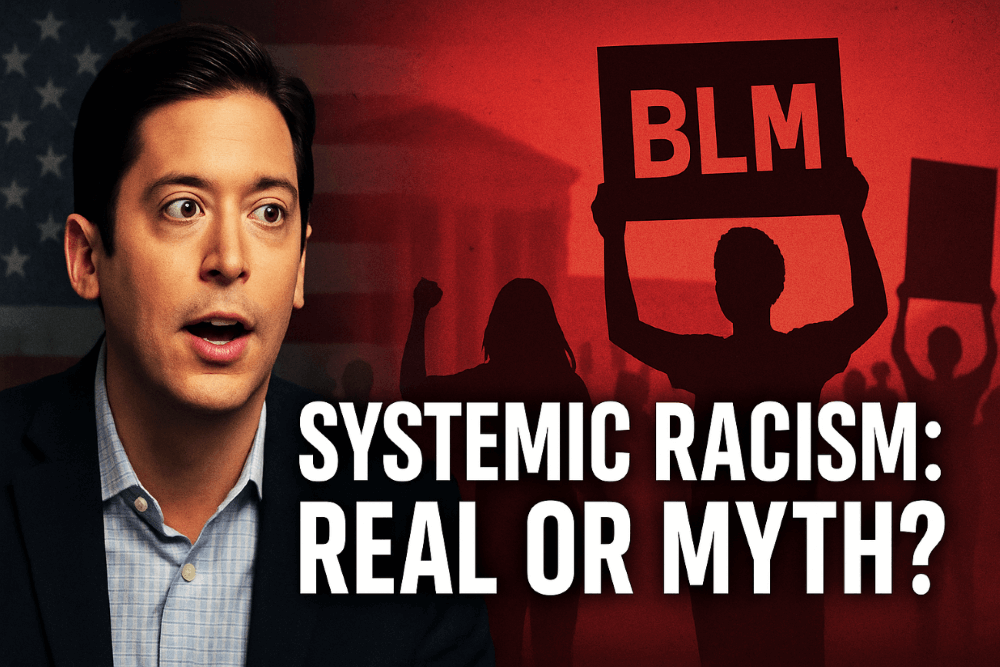
In a recent interview, conservative commentator Michael Knowles responded to a question on systemic racism, particularly in the context of university campuses and the broader American society. He is critical of the Black Lives Matter (BLM) movement and affirmative action policies.
Affirmative Action and Race-Based Admissions
According to Knowles, the only form of systemic racism occurring on college campuses today is in favor of Black and Hispanic students, through affirmative action programs that, until recently, allowed admissions committees to consider race as a factor.
“The only systemic racism on university campuses… is that Black and Hispanic students are given an advantage on the basis of their race in terms of admissions relative to white and Asian students,”
He pointed to the U.S. Supreme Court decision that struck down affirmative action as unconstitutional and claimed that many universities continue to sidestep the ruling through “wink-and-nod” tactics, such as soliciting personal stories in admission essays to still infer racial identity.
Addressing Challenges in the Black Community
While denying the existence of systemic racism as commonly understood, Knowles did acknowledge that Black Americans face serious social and economic challenges.
“There are major, serious problems affecting Black people in America that are legitimate and need to be addressed,” he said, citing high out-of-wedlock birth rates, abortion statistics, and crime.
However, he argued that the solutions must be political and lawful, not violent or rooted in activism that bypasses the democratic process.
Harsh Criticism of the BLM Movement
Knowles was unequivocal in his view of Black Lives Matter, labeling it a “thoroughly corrupt” and Marxist-inspired movement that caused more harm than good during its peak in 2020.
“BLM appeared to stand for ‘Buy Large Mansions,’” he quipped, referencing the controversial financial practices of BLM’s leadership.
He also condemned the violent riots that occurred in some cities during the protests, accusing mainstream Democrats of bailing out individuals involved in property destruction and looting.
“None of this does anything to advance racial justice. All of those people should have been locked up for a long time.”
Is BLM Still Relevant?
Knowles’ take highlights a growing divide in how Americans view social justice movements. While many see BLM as a response to real issues of racial inequality and police brutality, critics like Knowles argue that the organization has veered too far from its original mission—and has become a vehicle for political extremism and personal enrichment.
Final Thoughts
Michael Knowles’ comments may be controversial, but they reflect a broader conservative perspective on race, activism, and justice in the U.S. As conversations about these issues continue, it’s critical to listen to—and challenge—viewpoints from all sides of the ideological spectrum.
Whether you agree or disagree with Knowles, his take raises a key question:
Are we addressing racial inequality effectively—or just creating new injustices in the name of equity?
Previous opinion posts