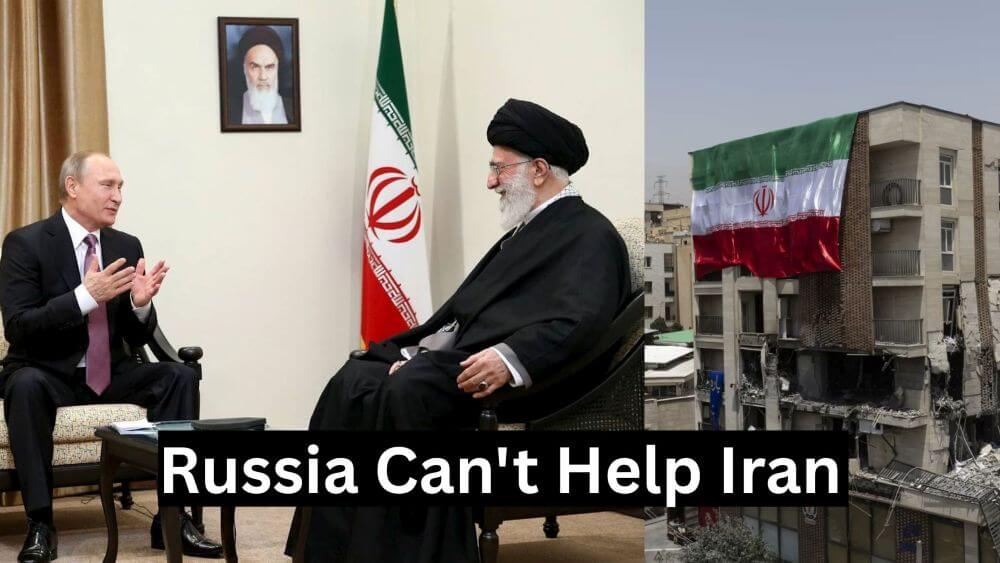
The geopolitical landscape shifted forever on March 2, 2026. Following the decisive US-Israeli airstrikes that resulted in the death of Supreme Leader Khamenei, all eyes turned to Moscow.
The Russia-Iran alliance has long been touted as a “no-limits” partnership of convenience and shared anti-Western sentiment. However, as the smoke clears over Tehran, a harsh reality is setting in: Vladimir Putin is in no position to help his closest Middle Eastern ally.
Despite years of military cooperation and intelligence sharing, the Kremlin’s response has been limited to fiery rhetoric and diplomatic posturing. The reason is simple: Russia is overstretched, underfunded, and strategically paralyzed.
The Financial Drain of the Ukraine Conflict
Russia is currently burning through upwards of $150 billion annually to sustain its invasion of Ukraine. This massive expenditure has hollowed out the Russian treasury and forced the economy into a permanent wartime footing.
While Iran has provided the “Shahed” drones that have plagued Ukrainian cities, Putin cannot return the favor in kind. Every ruble, every shell, and every soldier is committed to the Donbas and defending Russian border regions.
Why the Russian Economy is Sidelined:
- Sanction Paralysis: Global sanctions have severed Russia from Western capital markets, making it impossible to bankroll a foreign war.
- Inflationary Pressures: The cost of domestic goods in Russia is skyrocketing, limiting Putin’s ability to fund external military adventures.
- Resource Depletion: Russia is struggling to keep its own factories running; it has no surplus to ship to the Middle East.
The Myth of the Russia-Iran Alliance
For years, the Russia-Iran alliance was seen as a formidable axis. Russia provided advanced S-400 missile systems (on paper) and satellite intelligence, while Iran provided cheap, effective suicide drones.
However, the current crisis proves that this alliance has a very low ceiling. When the US and Israel launched their coordinated strikes, the expected Russian “umbrella” was nowhere to be found.
Why Putin Can’t Send Military Aid
- Air Defense Shortages: Ukraine’s successful strikes on Russian soil have forced Putin to keep his remaining S-400 and S-500 systems at home to protect Moscow and St. Petersburg.
- Troop Constraints: With nearly half a million casualties in Ukraine, Russia has no expeditionary force available to deploy to Iran.
- Logistical Nightmares: NATO’s increased presence in the Mediterranean and the Black Sea makes shipping heavy weaponry to Iran nearly impossible.
Putin’s “Paper Tiger” Diplomacy
Instead of hardware, Putin is offering words. We see the classic Kremlin playbook in action: condemning “unprovoked aggression,” calling for emergency UN Security Council meetings, and issuing stern warnings to Washington.
But these are the actions of a regional power, not a global superpower. By failing to intervene during the most critical moment in the history of the Islamic Republic, Russia has exposed its limits.
“Putin talks like a superpower but acts like an overstretched regional player.”
Iran is now learning that being a “partner” to Russia means being a junior partner who is expected to give much and receive very little in return when the stakes are highest.
The Long-Term Consequences for Russia
The fall of the current Iranian regime would be a catastrophic strategic blow to Moscow. If the US and Israel succeed in reshaping the Middle East, Russia loses its primary lever over global energy prices and its most significant bridgehead in the region.
If the West gains influence over Iranian energy exports, Russia’s remaining leverage over Europe vanishes. Yet, despite this existential threat to Russian interests, Putin can only watch from the sidelines. He will watch Iran burn and pretend it was a calculated choice, rather than a forced necessity.
Summary: A Partnership of Weakness
The Russia-Iran alliance was built on the idea of mutual defiance against the West. However, a “no-limits” partnership requires resources that Russia no longer possesses. As the US and Israel dismantle the IRGC infrastructure, Moscow’s silence is deafening. Putin is too broke, too tired, and too focused on his own survival in Ukraine to save his friends in Tehran.
FAQ: Frequently Asked Questions
Can Russia send S-400 systems to Iran?
While Iran has requested them, Russia is currently losing its own air defense units at a rapid rate in the Ukraine war and cannot afford to export them.
Why is Iran important to Russia?
Iran provides Russia with drones, ballistic missiles, and a strategic partner to bypass Western sanctions and challenge US influence in the Middle East.
Is the Russia-Iran alliance officially over?
The alliance still exists on paper, but its practical effectiveness is currently at an all-time low due to Russia’s military and financial exhaustion.
Previous Politics posts
Leave a Reply