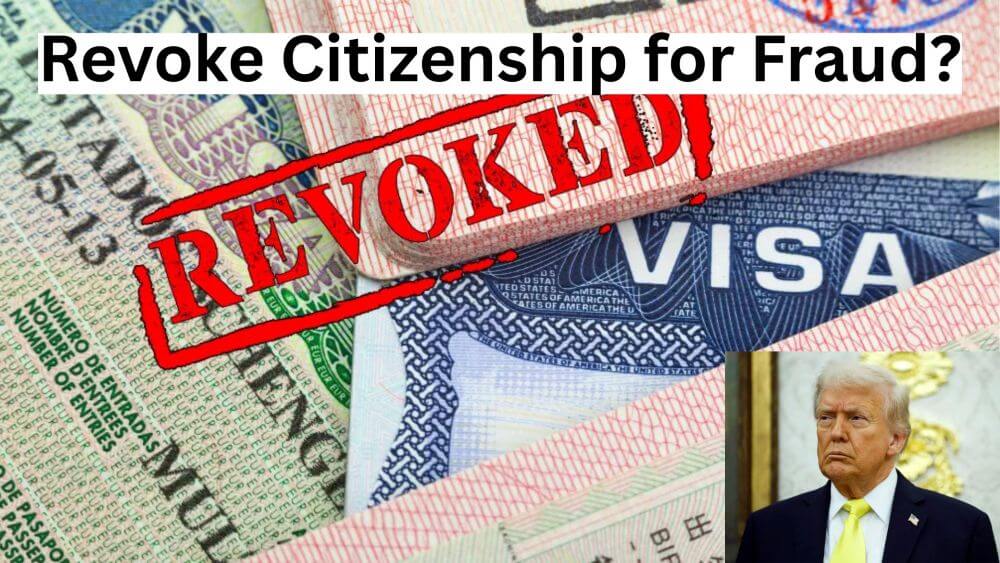
As an observer of economic and social policies, I’ve long believed that strong societies are built on trust, accountability, and shared values. Recent events in the United States, particularly the massive fraud scandals in Minnesota, have underscored a harsh reality: unchecked immigration from cultures with different norms can erode that trust. President Trump’s proposal to denaturalize immigrants convicted of defrauding U.S. citizens is a necesary step toward reclaiming integrity in the system. It’s time we acknowledge that homogeneity fosters cohesion, while unchecked diversity often breeds division and distrust. Let me explain why this policy could be a game-changer for America.
The Case for Homogeneity: Trust as the Foundation of Society
Nations thrive when their citizens share common values, languages, and cultural norms. This isn’t just an opinion—it’s backed by research. Harvard political scientist Robert Putnam’s landmark 2007 study, based on interviews with nearly 30,000 Americans, found that in more diverse communities, people trust each other less, volunteer less, vote less, and even give less to charity. In homogeneous settings, trust flourishes because everyone operates under similar expectations of fairness and reciprocity. Diversity, on the other hand, can lead to “hunkering down,” where individuals withdraw from community life.
Putnam’s findings aren’t isolated. His work suggests that in the short term, ethnic diversity reduces social capital—the glue that holds societies together. While he optimistically notes that long-term integration can overcome this, the evidence shows that rapid influxes of immigrants from vastly different backgrounds often create friction before any benefits emerge. In the U.S., where diversity is celebrated as a “strength,” we’ve seen the opposite: increased polarization, lower civic engagement, and a breakdown in mutual trust.
Critics argue that diversity brings innovation and economic growth, and there’s some truth to that—diverse teams can spark creativity and better serve global markets. But these benefits are often overstated and come at a cost. Studies show that while diversity can enhance problem-solving in controlled settings like workplaces, at a societal level, it correlates with higher conflict, reduced cooperation, and even economic inefficiencies due to integration challenges. The drawbacks—such as cultural clashes and strained resources—frequently outweigh the upsides, especially when integration fails.
The Minnesota Fraud Scandal: A Stark Example of Cultural Mismatch
Look no further than Minnesota’s Feeding Our Future scandal for a real-world illustration. This nonprofit, meant to feed children during the COVID-19 pandemic, became the epicenter of what Attorney General Merrick Garland called the largest pandemic relief fraud in U.S. history. Prosecutors have charged over 78 people, with losses exceeding $250 million—and potentially up to $9 billion across related schemes. Most defendants are Somali Americans, part of Minnesota’s large Somali diaspora, which numbers around 76,000.
These individuals allegedly set up shell companies to bill the government for millions in nonexistent meals, laundering the funds through personal accounts, luxury purchases, and even overseas transfers. One defendant, Aimee Bock (the white founder of Feeding Our Future), was convicted alongside Somali American co-defendant Salim Said, but the scandal disproportionately involved members of the Somali community. This isn’t about race—it’s about culture. In some immigrant groups from regions with weak institutions, exploiting government systems might seem rational or normalized. But in America, where trust underpins everything from taxes to welfare, this behavior betrays the social contract.
Hardworking Americans pay taxes expecting responsible stewardship. When fraudsters game the system, it breeds resentment. Minnesota’s government, built on high-trust assumptions, lacked sufficient checks and balances to prevent this. The result? A sense of betrayal among taxpayers, eroded faith in institutions, and division along cultural lines. President Trump has rightly called Minnesota a “hub of fraudulent money laundering activity,” linking it to broader immigration issues.
Revoking Citizenship: A Legal and Necessary Tool
U.S. law already allows for denaturalization in cases of fraud during the naturalization process, such as concealing material facts or willful misrepresentation. Under the Immigration and Nationality Act, citizenship can be revoked if obtained illegally or through deceit. Trump’s plan extends this to post-naturalization fraud that exploits the system, arguing that such actions reveal a lack of good moral character that should have disqualified them initially.
This isn’t radical—it’s restorative. By removing those who abuse the privilege of citizenship, we can rebuild trust. For cultures where scamming is seen as savvy rather than unethical, integration may simply not work. The only sustainable solution is to prioritize immigrants who align with American values of honesty and self-reliance.
Of course, not all immigrants or Somalis are fraudsters; many contribute positively. But when group patterns emerge, as in this scandal, ignoring them invites more harm. Diversity advocates claim it enriches society, but evidence shows it can fragment it. Homogeneity isn’t about exclusion—it’s about preserving the trust that makes generosity possible.
Looking Ahead: Trump’s Vision for a United America
President Trump’s success in implementing this policy could heal divisions and deter future abuse. By focusing on accountability, we can foster a society where trust prevails over suspicion. Diversity isn’t inherently a strength—it’s a challenge that, unmanaged, leads to distrust. Let’s hope this initiative marks a return to the principles that made America great: unity, integrity, and shared purpose.