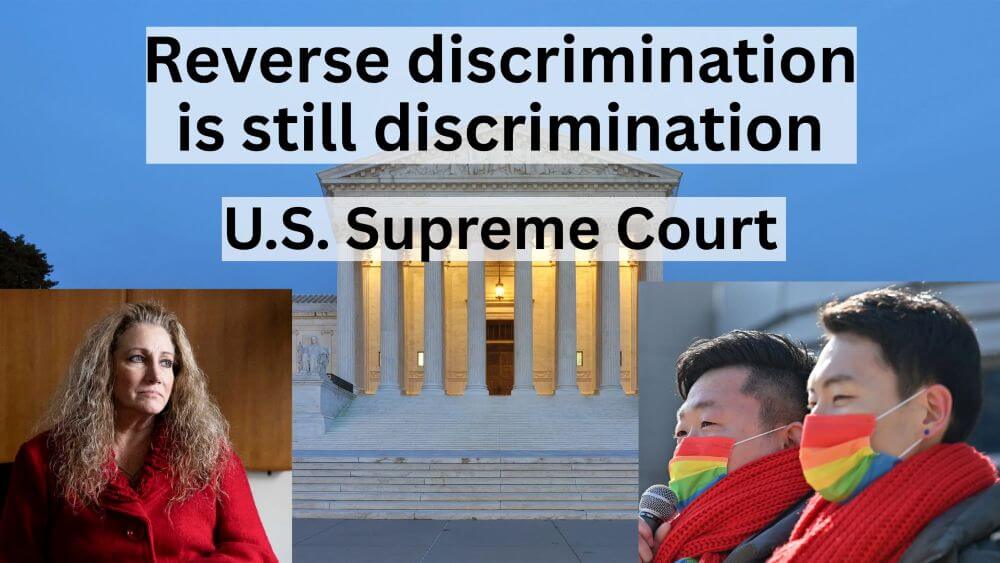
In a unanimous and groundbreaking decision, the U.S. Supreme Court reminded the nation of a basic principle: discrimination is discrimination, no matter who the victim is. The Court’s ruling in Ames v. Ohio Department of Youth Services rightly affirms that civil rights laws protect every individual—not just those in historically marginalized groups.
The Case: Discrimination Based on Sexual Orientation
Marlean Ames, a heterosexual woman, worked for Ohio’s Department of Youth Services since 2004. After a decade of strong performance and promotion, she applied for another internal job in 2019. Despite positive evaluations—even from her gay supervisor—she was denied the role. Shortly after, she was demoted to a significantly lower-paying position. Both the role she sought and her former role were filled by gay employees.
Ames believed she was treated unfairly because she is heterosexual. But when she brought the case to court, the 6th Circuit Court of Appeals required her to meet a higher burden of proof than someone from a minority group. She had to show so-called “background circumstances” to suggest that the employer might discriminate against a majority group.
In other words, she wasn’t given equal protection under the law simply because of her identity as a heterosexual woman.
The Supreme Court’s Common-Sense Ruling
Thankfully, the Supreme Court unanimously struck down this unequal standard. Writing for the Court, Justice Ketanji Brown Jackson made it crystal clear: Title VII of the Civil Rights Act of 1964 does not impose tougher requirements on majority-group plaintiffs. The law prohibits discrimination “because of [an] individual’s race, color, religion, sex, or national origin.” It doesn’t say “unless you’re part of the majority.”
Justice Clarence Thomas, concurring with the ruling, criticized the creation of “atextual” standards by lower courts—rules that appear nowhere in the text of the law.
In essence, the Court said: justice must be blind to identity politics. If you’re discriminated against, you have the right to seek justice—period.
Reverse Discrimination Is Still Discrimination
There’s no moral or legal loophole that justifies mistreating someone because they are white, male, Christian, straight, or any other so-called “majority” identity. If we truly believe in fairness, we must apply that belief universally.
The Ames ruling is not a setback for minority rights. It is a reaffirmation of universal civil rights. The promise of Title VII is that no American should face discrimination in the workplace—regardless of who they are.
Denying someone a promotion because of their sexual orientation is wrong whether that person is gay or straight. It’s wrong whether the person is Black or white. It’s wrong whether they are Muslim or Christian.
Why This Decision Matters
In a time where identity politics increasingly dominate the public discourse, this decision is a much-needed reminder of the foundational values of equal treatment under the law.
Discrimination doesn’t become acceptable when the target is from a group society typically sees as privileged. It doesn’t become less harmful. And it doesn’t become legal.
The Supreme Court’s ruling prevents the courts from becoming political tools that favor one identity over another. It reinforces the simple but powerful truth that rights belong to individuals, not to groups.
Final Thoughts
I believe that fairness is not a zero-sum game. Supporting the rights of all people—regardless of their background—is not only consistent with the ideals of justice, but essential to maintaining a healthy democracy.
The Supreme Court did the right thing. They reminded us that reverse discrimination is still discrimination. And in doing so, they upheld the true meaning of equality.
Other Law Posts