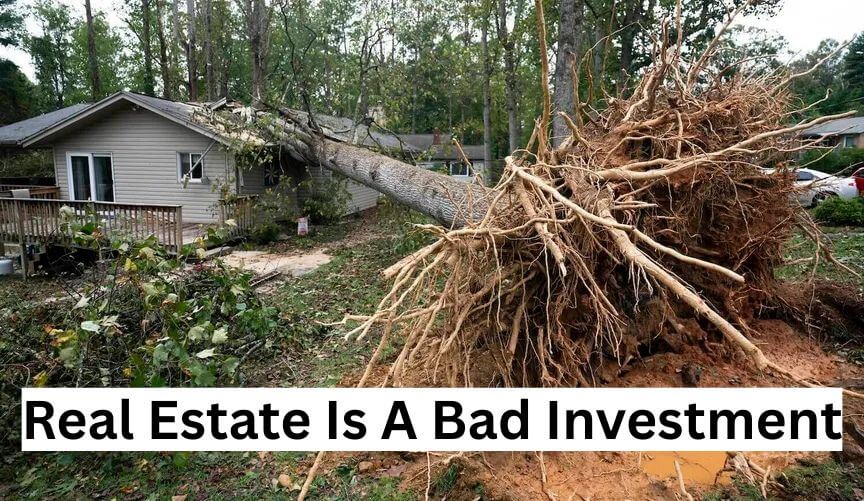
The real estate investment myth has been sold to us for centuries: buy property, collect rent, and retire wealthy. We are told it is the ultimate path to riches, but the cold, hard math often tells a different story.
For many, the truth is that most people don’t make enough money in real estate to even compensate for their own time. Once you factor in the capital invested and the hours spent managing the asset, the “dream” starts to look like a second, low-paying job.
The 5-Year Wall: Where the Math Stops Working
Year one of owning a rental property can look fantastic on a spreadsheet. You see the rent coming in, you subtract the mortgage, and you think you’ve found the golden ticket.
However, the real estate investment myth begins to unravel over a long enough timeline. If you own a property for more than 4 or 5 years, the reality of ownership sets in.
Taxes and insurance premiums inevitably increase, eating away at your margins. Wear and tear is constant, and eventually, the property will require a major Capital Expenditure (CapEx).
One Major Incident Can Wipe Out Years of Profit
True net cash flow over a decade is very likely close to zero for the average amateur investor. Your “profit” is a house of cards waiting for a single gust of wind.
- Roof Replacement: $\$10,000 – \$20,000$
- HVAC Failure: $\$5,000 – \$8,000$
- Sewer Line Issues: $\$3,000 – \$15,000$
- Plumbing Emergencies: Thousands in water damage and repairs.
Just one of these incidents can wipe out three to five years of cash flow overnight. If you are living off that money to pay your daily bills, you are one burst pipe away from financial ruin.
The “Accidental Slumlord” Trap
If you don’t build massive reserves, you may end up becoming a slumlord without ever meaning to. It’s not out of greed, but because the property is slowly bleeding you dry.
When the HVAC dies and you don’t have the $\$6,000$ in the bank because you used the “cash flow” for groceries, the property begins to deteriorate. You become stuck in a cycle of debt and decay.
The Hidden Cost: Your Opportunity Time
We rarely talk about the “Time Tax” involved in property management. To calculate your true return, you must account for:
- Administrative Burden: Paying taxes, insurance renewals, and endless paperwork.
- Legal Hurdles: Notary fees and navigating local regulations.
- Conflict Management: Disputes with tenants and arguments with condo associations.
If you valued your time at the same rate as your professional career, you would likely find that you are losing money every single month.
The best way to buy that time back is to use property management. This turns the average property portfolio investment into genuine passive income that works on your behalf behind the scenes. Monthly returns will be slightly lower because of the management fee, but in exchange, you get more time back, which may be more valuable to you. These days, there are plenty of different options when it comes to property management, so you don’t always have to pay a percentage of monthly rent.

Why Index Funds Are the Superior Alternative
Most people buy real estate because they don’t know what else to do with their money. This overvaluation leaves very little room for actual profit.
If your goal is to maximize returns rather than just park cash, there is a better way. When you buy a low-cost index fund, your money grows while you do absolutely nothing.
- Zero Management: No tenants will call you at 3:00 AM about a leaky toilet.
- Liquidity: You can sell an index fund in seconds; a house takes months.
- Passive Income: Dividend checks arrive in your account with zero effort.
- Diversification: You aren’t betting your entire net worth on one physical structure in one neighborhood.
Strategies for the Realistic Investor
If you still want to participate in the real estate investment myth, follow these rules to protect yourself:
- Buy at a Discount: The profit is made at the purchase, not the sale.
- Make it Durable: Use materials that won’t break every two years.
- The 5-Year Exit: Offload the property before the major CapEx items come due.
- Reserves Only: Never use rental income to pay your lifestyle bills.
Summary
Real estate is often a “cash poor” trap. Between rising taxes, inevitable maintenance, and the massive opportunity cost of your time, the true net return is frequently lower than a simple S&P 500 index fund. Don’t fall for the fantasy; invest in assets that grow without requiring your soul in exchange.
FAQ
Is real estate a good way to get rich?
For the average person, it is often a low-yield job. True wealth in real estate usually requires massive scale or professional-level flipping, not owning one or two rental units.
What is the “Time Tax” in real estate?
This refers to the hours spent on management, repairs, and tenant disputes. When factored in at a professional hourly rate, it often turns a “profitable” property into a net loss.
How much should I keep in reserves for a rental?
Ideally, you should have at least six months of expenses plus 10% of the property value set aside specifically for major repairs (CapEx).