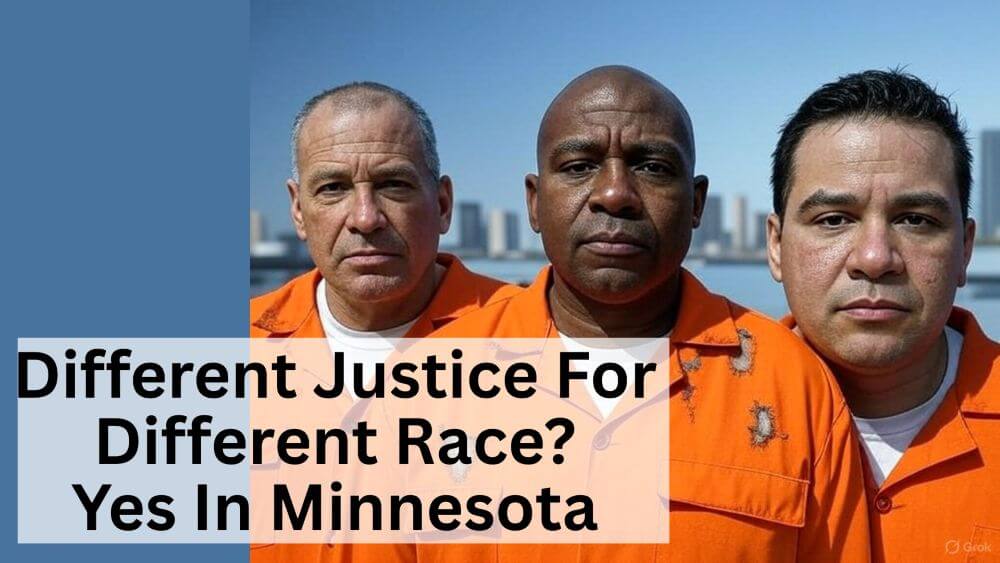
Prosecutors in Hennepin County, Minnesota, must follow a new and highly controversial policy: they are required to consider the race of a defendant when offering plea deals. This directive comes from Hennepin County Attorney Mary Moriarty, who argues it is part of a broader strategy to address racial disparities in the criminal justice system.
The policy—described as a negotiation guideline—asks prosecutors to view each defendant as a “whole person,” taking into account not only the facts of the case, but also the defendant’s age and racial identity. While it clarifies that race should not be a controlling factor, it states that race should still be part of the overall analysis.
This raises a fundamental question: Should the law treat people differently based on race?
Sources within the Hennepin County Attorney’s Office expressed deep concern about the policy, suggesting it may violate the U.S. Constitution—particularly the Equal Protection Clause of the 14th Amendment, which guarantees that no state shall “deny to any person within its jurisdiction the equal protection of the laws.”
To put it bluntly: You cannot have one set of legal outcomes for white defendants, and another for Black, Latino, or Indigenous defendants. That is not only morally problematic; it is plainly unconstitutional.
Proponents of the policy argue that it doesn’t create racial disparities—it attempts to correct them. A legal analyst familiar with the policy said, “I don’t see a constitutional problem—specifically because the policy tells prosecutors to avoid racial disparities, not to create them.”
Yet critics believe this rationale is self-defeating. “Once you instruct prosecutors to consider race, it may not matter what other disclaimers you include—the policy is vulnerable to being struck down,” said another legal expert. Even a well-intentioned policy can become discriminatory if it introduces race as a factor in legal decision-making.
U.S. Attorney General Pamela Bondi put it clearly:
And I agree. There must be one justice system for all. Not a system for one group and another for others. Once we cross that line, we’re not correcting bias—we’re institutionalizing a new one.
So what’s the solution?
Yes, racial disparities exist in the justice system. Yes, they must be addressed. But the answer isn’t to treat people differently based on race. It’s to root out the deeper, systemic causes of inequality—such as over-policing in certain communities, lack of access to quality legal defense, and economic disparities that increase vulnerability to the justice system.
Policies like this one in Hennepin County, no matter how well-meaning, risk eroding the principle of equal treatment under the law. Justice must be blind—or it is not justice at all.
Previous Politics posts