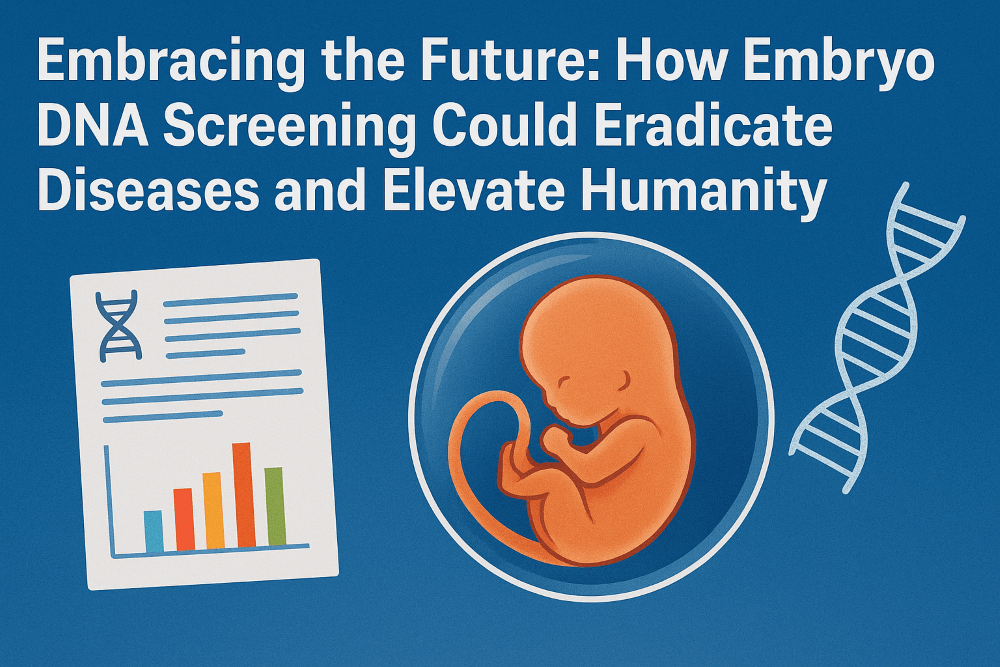
If we compare a human being from today with a human being from 100 years ago, we have better nutrition, medicine, educantion, and technoloy have allowed us to express more our existing biological potentiona, espacially in height, lifespan, and certain cognitive skills. Think about the olympics, every year we break new records of speed and power because we are better.
Well, the improvement is just beginning.
We are working with embryo DNA screening. This isn’t science fiction; it’s happening now, and it has the potential to not only wipe out hereditary diseases but also pave the way for a healthier, more capable human race in the coming decades. Let’s explore what this means for us and our descendants.
What Is This New Technology?
Imagine being able to peek into your future child’s genetic blueprint before they’re even born. That’s the promise of embryo DNA screening, a tool that’s revolutionizing in vitro fertilization (IVF). Companies and laboratories are offering services like Nucleus Embryo and IVF+, which allow parents to analyze the DNA of embryos created through IVF. For costs starting around $8,999 (with premium packages up to $30,000), you can get detailed reports on over 2,000 hereditary disorders and polygenic risks for traits ranging from health conditions to physical and cognitive attributes.
Here’s how it works: During IVF, multiple embryos are created and tested for chromosomal abnormalities (like Down syndrome). The lab will take it further by sequencing the DNA and using advanced polygenic scores (PGS)—algorithms based on massive genetic datasets from biobanks like the UK Biobank and the Million Veterans Program. These scores predict risks for diseases such as Alzheimer’s, breast cancer, type 2 diabetes, heart disease, ADHD, autism, and even traits like height, intelligence (IQ), and longevity. Parents can then select the embryo with the lowest risks or most favorable predictions, essentially optimizing for a healthier start in life.
It’s not gene editing (like CRISPR); it’s selection from what’s already there. As the labs put it, their platform “brings together 900+ genetic analyses to help you understand your embryo’s future body, mind, and health.” They claim to predict human longevity more accurately than ever, drawing from data on 1.5 million people.
Eradicating Diseases: A Real Possibility
One of the most exciting aspects is the potential to eradicate or drastically reduce genetic diseases. By selecting embryos with lower polygenic risks, parents can slash the odds of their child developing serious conditions. For example, data shows that choosing from just five embryos could reduce Alzheimer’s risk by up to 55.3%, type 1 diabetes by 67%, or breast cancer in high-risk families by significant margins. In sibling studies, the higher-risk individual was affected by diseases like cancer or diabetes in up to 90% of cases—meaning selection could prevent that fate.
Over generations, widespread adoption could lead to the near-elimination of hereditary disorders like cystic fibrosis or hemochromatosis. Combine this with ongoing advancements in AI-driven genomics (as seen in recent startups using AI to predict embryo disease risks), and we’re looking at a future where preventable genetic illnesses become relics of the past. It’s like vaccinating against diseases at the conception stage—proactive, precise, and powerful.
Lessons from the Past: How We’ve Already Become “Better” Humans
This isn’t the first time humanity has leveraged science to upgrade itself. Think about the last 100 years: Through better nutrition, sanitation, vaccines, and medical discoveries like antibiotics and insulin, we’ve transformed as a species. People today are, on average, taller, stronger, and healthier than our ancestors in the early 1900s. Life expectancy has soared from around 50 years to over 70 globally, infant mortality has plummeted, and chronic diseases that once ravaged populations are now manageable or preventable.
These improvements didn’t happen overnight—they started with innovations accessible to the few (like early vitamins or penicillin) and spread through public health initiatives and economies of scale. The result? A more robust human race, capable of feats our great-grandparents could only dream of, from running marathons in old age to global travel without fear of epidemics.
Looking Ahead: A Superior Humanity in 100 Years (or Sooner)
Fast-forward 100 years, and embryo screening could accelerate this evolution exponentially. With genetic optimization becoming routine, future generations might enjoy not just longer lives but higher quality ones—free from many debilitating diseases, with enhanced resilience to environmental stressors, and even boosted cognitive and physical potentials. Imagine a world where ADHD, autism, or schizophrenia rates drop dramatically because parents can minimize genetic predispositions early on. Or where average IQ edges up slightly across populations, fostering innovation and problem-solving on a grand scale.
Of course, this tech will likely start with those who can afford it, much like IVF did in the 1970s. But as costs drop and accessibility improves (we’re already seeing surges in demand and regulatory discussions), it could become as commonplace as prenatal vitamins. In 50 to 100 years, we might look back at unoptimized pregnancies the way we view life before seatbelts or smartphones—quaint, but unnecessarily risky.
Ethically, there are debates about equity and “designer babies,” but the core benefit is undeniable: healthier kids mean healthier societies, with lower healthcare burdens and more productive lives. These tools empower “informed choices for individual health and that of future generations.”
Final Thoughts
Embryo DNA screening isn’t just about having the “best baby”—it’s about building a better tomorrow for all of us. Just as nutrition and medicine have made us stronger than our forebears, genetic technologies like those from Nucleus Genomics could make our descendants even more capable, resilient, and vibrant. If you’re planning a family or simply intrigued by human potential, keep an eye on this space—it’s evolving fast.
What do you think? Would you consider embryo screening for your family? Share your thoughts in the comments below.
Other Personal Development Posts