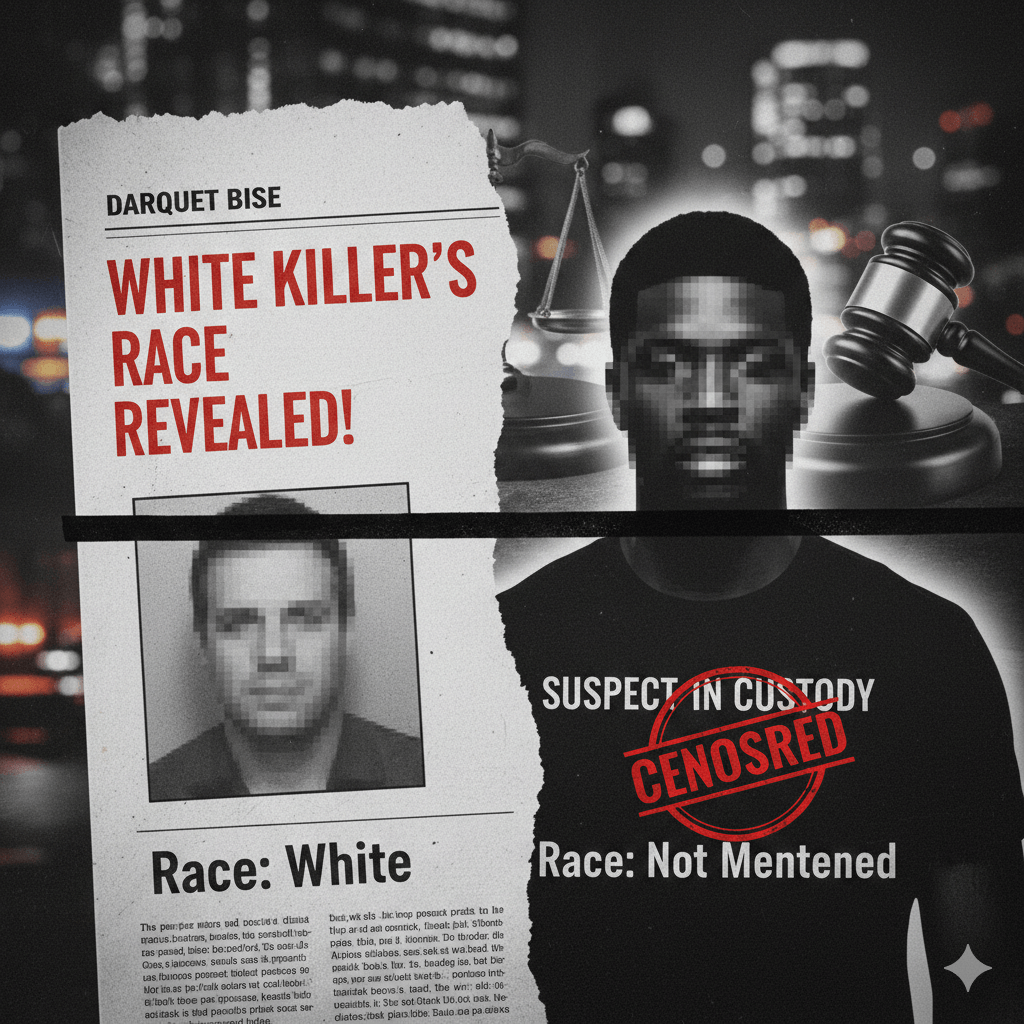
In the age of instant information, the media plays a pivotal role in shaping public perception. However, the lens through which crime is reported is often far from neutral. A growing body of evidence suggests a significant bias in how the race of offenders is mentioned—or omitted—depending on their background. This selective reporting not only distorts the truth but also fuels social division.
The Statistical Disparity
Data from various studies highlight a stark contrast in crime reporting. When a suspect is white, their race is mentioned in approximately 25% of news reports. In contrast, when the suspect is Black, race is mentioned only about 6% of the time, and for Hispanic suspects, it drops to a mere 3%.
This discrepancy is not accidental. It reflects a conscious or subconscious effort by media outlets to navigate the complexities of race and crime. While the intention might be to avoid perpetuating stereotypes, the result is a skewed narrative that leaves the public with an incomplete picture of reality.
The “George Floyd Effect” and Data Misclassification
Following the tragic death of George Floyd in 2020, there was a noticeable shift in how the media and law enforcement handled racial data. Many police departments, under pressure to be more “sensitive,” began to omit or misclassify the ethnicity of offenders. This “George Floyd Effect” has led to a significant underreporting of crimes committed by certain groups, further complicating the task of obtaining accurate data.
In many jurisdictions, the classification of “Hispanic” has become a point of contention. Some departments categorize Hispanic individuals as “White,” while others use a separate category. This lack of standardization makes it difficult to draw meaningful conclusions from the data and allows for further manipulation of the narrative.
The “George Floyd Effect” and Moral Clarity
This trend has intensified in recent years. Following the social unrest of 2020, the disparity widened significantly. Post-2020, major papers became seven times more likely to mention a white offender’s race than a Black offender’s race.
This shift is often defended under the guise of “moral clarity.” Proponents argue that journalists should prioritize social justice and avoid perpetuating negative stereotypes. However, when “moral clarity” results in the omission of factual data, it risks becoming selective reporting. By choosing when race is relevant based on the identity of the perpetrator, the media provides a distorted view of the reality of crime.
Case Study: Selective Omission in New York City (December 2025)
The impact of this bias is most evident in real-time reporting of violent incidents. On December 16, 2025, NBC News New York covered a disturbing story titled, “2 separate attacks on Jewish men in Brooklyn spark concern among community.“ Despite the NYPD releasing clear photos of the three suspects via Crime Stoppers, the NBC New York article omitted these visuals entirely. Furthermore, the report attributed a violent subway event to a “seat dispute” rather than the potential antisemitism condemned by community leaders and Mayor Eric Adams.
When the media refuses to publish suspect photos—especially when law enforcement has provided them to help protect the public—it fuels the perception of a protective bias. By hiding the identity of Black offenders while emphasizing the race of White offenders, the media abandons its duty to provide objective information, opting instead to curate a narrative based on social optics rather than public safety.
The Misclassification Problem: Who is “White”?
The distortion of crime statistics isn’t limited to newsrooms; it often begins at the police station. Data collection is frequently muddied by how suspects are classified at the time of arrest.
- Ethnicity vs. Race: Many jurisdictions still classify Hispanic or Latino suspects as “White” in their primary databases because “Hispanic” is often treated as an ethnicity rather than a race.
- Visual Assessment: In many cases, light-skinned Black individuals or multiracial individuals are recorded as “White” by responding officers, leading to skewed official statistics.
When the media relies on these initial police reports without further investigation, it compounds the inaccuracy. If a Latino man is arrested and listed as white, and the media then highlights that “white” race in the headline, the public receives a doubly inaccurate picture of the event.
The Consequences of Biased Reporting
The consequences of this selective reporting are far-reaching. When the public is consistently presented with a distorted view of crime, it erodes trust in the media and law enforcement. It also hinders the ability of policymakers to develop effective strategies for addressing the root causes of crime.
Furthermore, biased reporting can lead to a sense of injustice and resentment among those who feel that their communities are being unfairly targeted or protected. This only serves to deepen existing social cleavages and makes it more difficult to achieve true racial harmony.
Why This Matters
Accuracy is the bedrock of trust. When news organizations apply different standards to different groups, they sacrifice their credibility.
If race is a relevant detail in a homicide case, it should be relevant across the board. If it is considered irrelevant or “harmful” to report, that standard should be applied universally. By treating race as a selective variable—highlighted for some and buried for others—the media fails in its primary duty: to tell the whole truth, regardless of how uncomfortable that truth might be.
The result of this selective reporting is a public that is less informed and more polarized. True “moral clarity” doesn’t come from hiding facts; it comes from presenting them honestly and allowing the public to engage with the world as it actually is.
Moving Toward Transparency
To address this issue, media outlets must commit to greater transparency and objectivity in their crime reporting. This includes:
- Consistent Reporting of Race: If race is mentioned for one group, it should be mentioned for all.
- Accurate Data Collection: Law enforcement agencies must adopt standardized methods for classifying the ethnicity of offenders.
- Accountability: The public must hold media outlets accountable for biased reporting and demand a more balanced narrative.
Only by confronting these biases head-on can we hope to create a more informed and equitable society. The media’s role is to report the facts, not to shape them to fit a particular social or political agenda.