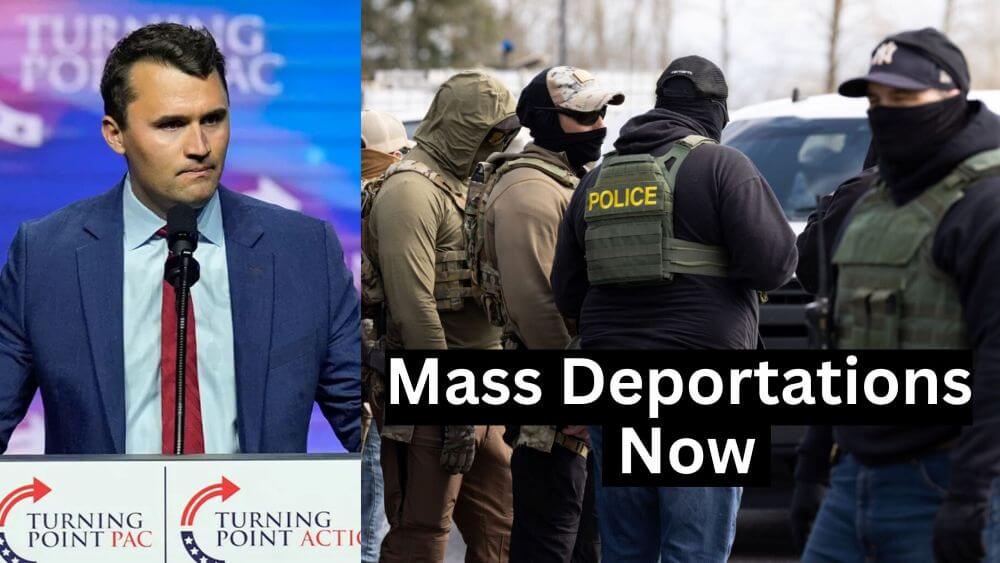
In recent years, the debate over immigration policy in the United States has reached a fever pitch, with passionate arguments on both sides. However, one perspective stands out as both morally and legally sound: the call for mass deportations of undocumented immigrants. As Charlie Kirk, founder of Turning Point USA, eloquently stated, “We voted for mass deportations. We did not vote for mass amnesty. And we expect our leaders to deliver it and bring back our country to a place of citizenship and Americans being put first.” This stance is not only a reflection of the will of the American people but also a necessary step to uphold the rule of law, ensure fairness, and pave the way for a robust system of legal immigration.
The Legal Imperative
At its core, mass deportation is about enforcing the law. The United States, like any sovereign nation, has the right and responsibility to control its borders and regulate who enters and resides within its territory. Undocumented immigrants, by definition, have entered or remained in the country in violation of federal law. This is not a minor infraction; it is a fundamental breach of the social contract that governs our nation. As former DHS Secretary Chad Wolf pointed out in a recent Fox News interview, “You can prioritize the worst of the worst, but just because you’re prioritizing doesn’t mean that you are excluding other classes of individuals that, again, don’t have a legal right to be here.” The message is clear: no one is above the law, and everyone who enters illegally must face the consequences.
Fairness for American Citizens
The fairness argument is equally compelling. Millions of Americans, particularly recent college graduates, are struggling to find jobs in a competitive market. Charlie Kirk’s impassioned plea resonates with many: “Those of you that are looking for a job, you should not have to compete against a foreigner for your job. American college graduates should come first.” Undocumented immigrants, often willing to work for lower wages, create an uneven playing field that disadvantages American workers. This is not about xenophobia; it is about ensuring that those who have followed the rules and contributed to our society through taxes and civic engagement are not penalized by those who have not.
Moreover, the financial burden on American taxpayers is staggering. Estimates suggest that undocumented immigrants cost the U.S. approximately $150 billion annually in services such as healthcare, education, and law enforcement. This is money that could be better spent on infrastructure, education, and other critical needs. Mass deportation would alleviate this burden, freeing up resources for legal residents and citizens.
The Humanitarian and Security Concerns
Critics of mass deportation often cite humanitarian concerns, but a closer look reveals a different story. The current system, which has allowed millions to enter illegally, has led to dire consequences, including the disappearance of 325,000 migrant children into trafficking networks. This is not a humane outcome. By enforcing the law and deterring illegal entry, we can prevent such tragedies and ensure that those who seek to come to America do so through legal channels, where they can be properly vetted and protected.
Security is another critical factor. The presence of undocumented immigrants, many of whom have not been thoroughly screened, poses risks to public safety. The Laken Riley Act (H.R.7511), which mandates detention for certain offenses by undocumented immigrants, is a step in the right direction. As Chad Wolf noted, previous administrations’ policies of excluding certain groups from deportation contributed to border crises. We cannot afford to repeat those mistakes. Mass deportation sends a clear message: if you enter illegally, you will be removed, period.
A Path to Legal Immigration
Importantly, advocating for mass deportations does not mean opposing immigration altogether. The United States has always been a nation of immigrants, and we need immigrants to drive our economy, innovate, and enrich our culture. However, these immigrants must come legally. Legal immigration ensures that newcomers are vetted, integrated, and contribute to society in a structured manner. It also respects the millions of people around the world who are patiently waiting their turn to enter the U.S. through proper channels. Mass deportation is not an end but a means to restore integrity to our immigration system, making it fairer and more efficient for everyone involved.
The Political Will
The political will for mass deportations is evident. As Charlie Kirk emphasized, “We will not put up with any exceptions, any carveouts, any loopholes, any exceptions, any asterisks, any iotas.” The American people have spoken, and their leaders must act. The recent actions by ICE, such as the removal of 1,361 violent criminals in Houston and the consideration of new detention sites, are steps in the right direction. These efforts, supported by figures like Chad Wolf, reflect a broader shift towards stricter enforcement, aligning with the expectations of voters who demand accountability and order.
Conclusion
Mass deportation is not just a policy; it is a moral and legal necessity. It upholds the rule of law, ensures fairness for American citizens, addresses humanitarian and security concerns, and paves the way for a robust system of legal immigration. As Charlie Kirk rightly said, “It is time for the largest deportation effort this country has ever seen.” This is not about turning away those who seek a better life; it is about ensuring that they do so within the framework of our laws and values. By taking this bold step, we can restore order, protect our citizens, and build a brighter future for all.
Previous opinion posts