In a time when political polarization has reached a boiling point, the line between passionate advocacy and deadly fanaticism is being crossed with disturbing frequency. Over the past year, a troubling trend has emerged: individuals who identify with left-leaning ideologies committing horrific acts of violence in the name of political or social justice.
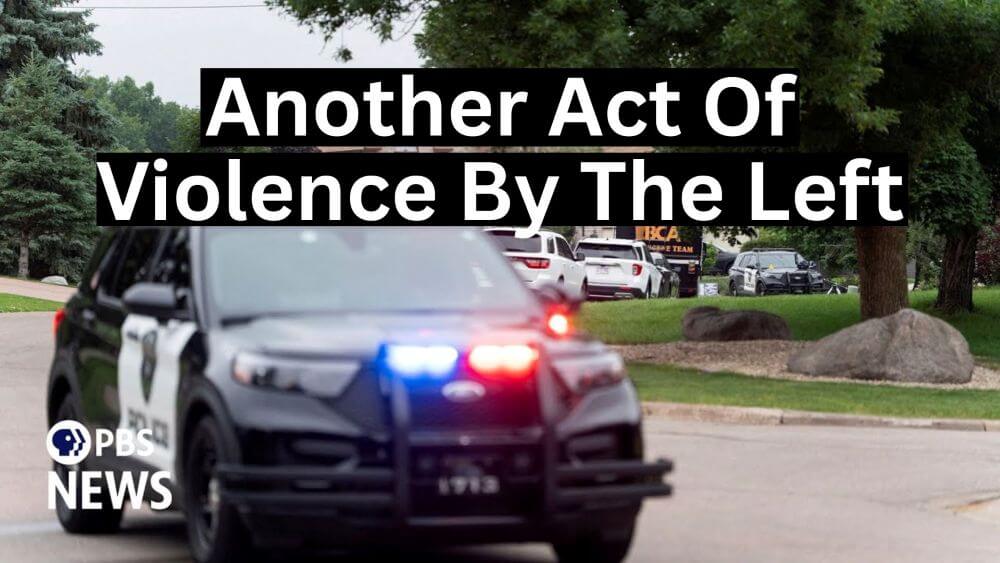
On June 14, 2025, tragedy struck Minnesota when Democratic Representative Melissa Hortman and her husband Mark Hortman were assassinated. The alleged killer, Vance Luther Boelter, is reported to have been a member of her own party. Though the investigation is ongoing, early speculation suggests Boelter was enraged by Hortman’s vote against a proposal to grant taxpayer-funded healthcare to undocumented immigrants. That vote, controversial within her political base, may have made her a target of extremist vengeance. The fact that she was killed by someone who ostensibly shared her broader political ideals underscores a dangerous reality: even intra-party dissent is now grounds for lethal retribution in the minds of the radicalized.
This wasn’t an isolated event.
On May 21, 2025, just blocks from the U.S. Capitol, Israeli embassy staffers Yaron Lischinsky and Sarah Milgrim were gunned down outside the Capital Jewish Museum. The assailant reportedly shouted “Free, Free Palestine” before opening fire. This politically motivated double homicide shows how foreign conflicts can spill over into domestic violence, with civilians paying the ultimate price for tensions they had no role in creating.
Going back further, on December 4, 2024, the CEO of United Healthcare, Brian Thompson, was assassinated by Luigi Mangione, a self-described anti-capitalist. The reaction on social media was chilling: rather than widespread condemnation, many celebrated the murder. Comments like “EAT THE RICH” and “Did the CEO die quickly, or did he have to wait months to see if his insurance covered a fatal gunshot wound?” reveal how dehumanizing rhetoric can pave the road to violence—and even public celebration of it.
And, of course, who can forget July 13, 2024, when Donald Trump was nearly assassinated during a campaign rally by 20-year-old Thomas Matthew Crooks, who fired eight rounds with an AR-15-style rifle from a rooftop. Trump was wounded; one spectator, Corey Comperatore, was killed, and two others were critically injured. Crooks’s social media trail showed a clear disdain for Trump and right-wing politics. His act wasn’t just an attack on a candidate—it was an attack on democracy itself.
When Belief Becomes Bloodshed
Political violence is not new. But what’s especially disturbing about these recent events is the normalization—or even celebration—of such acts by online communities that see violence as a justified tool in their ideological crusade.
The notion that some lives are worth less because of their political affiliation or wealth is a dangerous moral slope. Once we dehumanize those who disagree with us, it becomes easier to rationalize their suffering—or their death. That is not justice. That is extremism.
Whether left or right, political violence is an affront to civil society. It erodes public trust, silences dialogue through fear, and poisons the democratic process.
A Call for Moral Courage
The solution is not simple. But one starting point is to hold all political violence to the same moral standard. It’s not enough to condemn violence only when it comes from “the other side.” We must also be willing to look inward, to challenge extremism when it comes from people who claim to share our views.
There is nothing progressive about assassination. There is nothing revolutionary about terrorism. There is no justice in murder.
If we hope to preserve a free and open society, we must have the moral courage to reject violence in all its forms—even, and especially, when it comes from those we think are “on our side.”
Previous Politics posts
- Why Millions Are Walking Away from the Political Left
- Zero Tolerance in Florida: What Happens When Protests Cross the Line
- Israel vs. Iran: A Conflict Rooted in Survival, Not Aggression