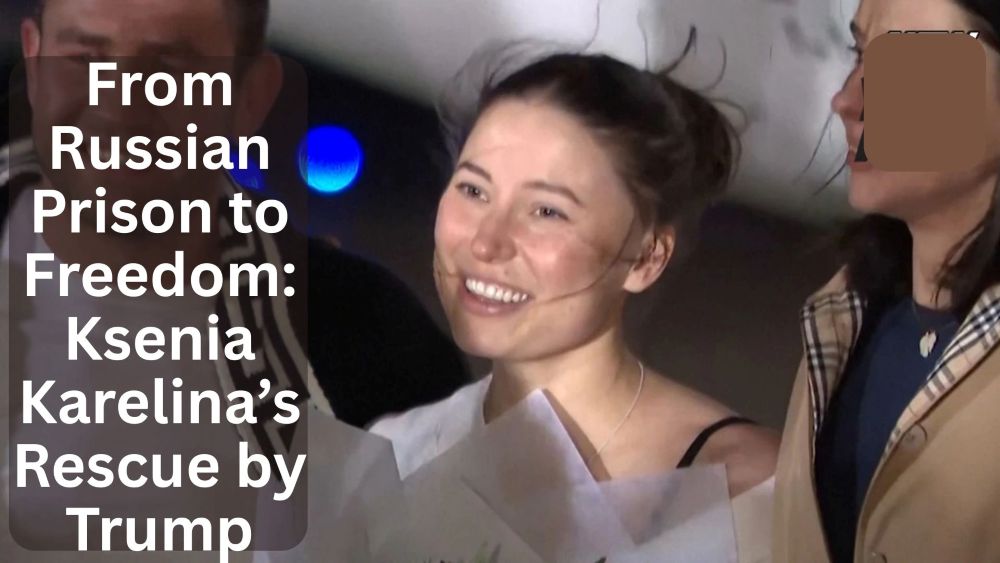
In early 2024, Ksenia Karelina, a Russian-American ballerina and Los Angeles resident, traveled to Russia to visit her family, including her 90-year-old grandmother. What was meant to be a brief reunion turned into a nightmare when Russian authorities arrested her in February. The charge? Treason, stemming from a $51.80 donation she made in 2022 to a U.S.-based charity supporting Ukraine. Despite her dual citizenship and the minor nature of the alleged offense, Karelina was convicted and sentenced to 12 years in a penal colony—a stark example of Russia’s harsh crackdown on perceived dissent amid its ongoing conflict with Ukraine.
Karelina’s case sparked outrage in the U.S., with many calling her detention politically motivated. Her fiancé, Chris van Heerden, tirelessly advocated for her release, emphasizing her innocence and love for both her American and Russian heritage. The U.S. government labeled her detention wrongful, but initial efforts to secure her freedom stalled, leaving her out of a major prisoner swap in August 2024 that freed other Americans.
Enter the Trump administration. Since taking office, President Donald Trump has prioritized bringing home U.S. citizens detained abroad, viewing such cases as critical to American sovereignty and pride. In April 2025, after intense negotiations, Karelina was released in a prisoner exchange with Russia. She was swapped for Arthur Petrov, a dual Russian-German citizen held in the U.S. on smuggling charges. The deal, facilitated in Abu Dhabi with UAE mediation, marked the second successful swap under Trump’s watch, following the release of American teacher Marc Fogel in February.
Karelina landed at Joint Base Andrews on April 10, 2025, greeted by an emotional reunion with van Heerden and cheers from supporters. In a heartfelt video, she thanked Trump and the U.S. government, saying, “I never felt more blessed to be American.” Trump’s team, including CIA Director John Ratcliffe and hostage envoy Adam Boehler, was credited for cutting through diplomatic red tape to secure her freedom.
Trump’s push to repatriate Americans reflects a broader commitment to protecting citizens overseas. Karelina’s release underscores his administration’s willingness to engage even adversarial nations like Russia to bring people home. While critics argue such swaps risk emboldening hostile regimes, supporters see them as proof of decisive leadership. For Karelina, the focus is simpler: she’s back with her loved ones, her dog Boots eagerly awaiting her return.
Her story is a reminder of the personal toll of global tensions—and the power of determined diplomacy to resolve them. As Trump continues his mission, other Americans still detained abroad may find hope in Karelina’s homecoming.
Previous Politics posts