When war erupted in Gaza, millions of people across the Western world flooded the streets. College campuses shut down. Media outlets ran wall-to-wall coverage. Celebrities, professors, and politicians competed to display their outrage.
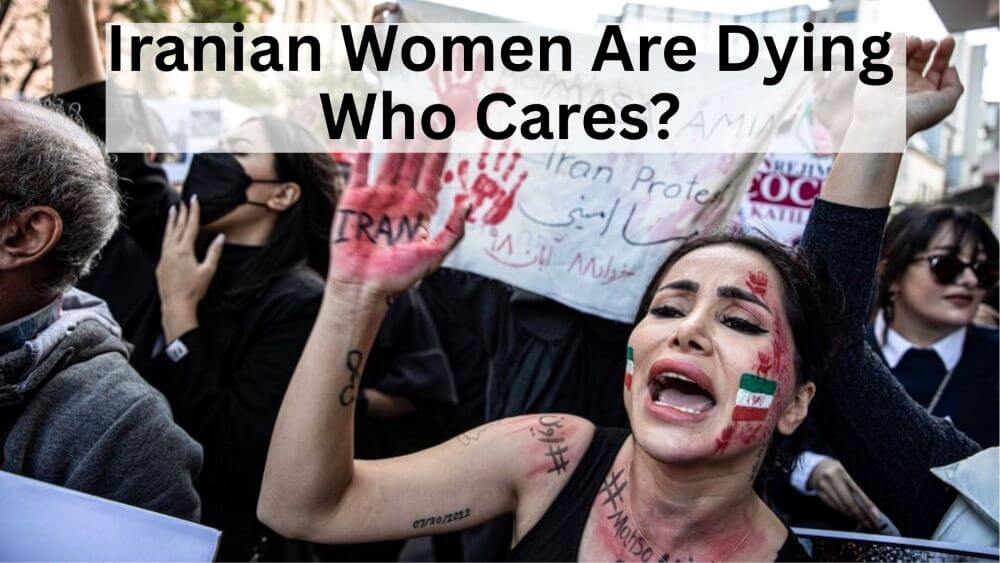
Now Iran is on fire.
The Iranian people are crying out for help—risking death in the streets—and the silence from the West is deafening. The same media that could not stop talking about Gaza barely mentions Iran. The same campuses that erupted in protest are suddenly uninterested. The same activists who claimed to speak for “the oppressed” have nothing to say.
This exposes an uncomfortable truth: it was never really about the Gazan people. It was never about empathy. It was about ideology, fashion, and moral signaling.
Why Iranians Are Willing to Die
People do not risk their lives lightly. They do not walk into live ammunition for slogans or hashtags.
In Iran, the reason is brutally simple.
For decades, the Islamic Republic has suffocated every aspect of human life—speech, work, family, art, women, and economic survival—under a clerical system that treats liberty as a crime. This is not a misunderstood government. It is not a “complex situation.” It is a theocratic dictatorship that survives through fear.
There is no way to tell the story of Iran without confronting the nature of the regime itself.
And that is precisely what much of the Western progressive world refuses to do.
The Taboo No One Wants to Touch
In Western progressive discourse, Islam has been racialized.
It is no longer treated as a belief system, a political ideology, or a set of power structures. Instead, it is treated as a proxy for race or ethnicity—as if Islam were a skin color rather than a doctrine. Criticizing Islam is framed as an attack on “brown people,” Arabs, or “the Middle East,” even when the loudest critics are Muslims themselves.
This intellectual dishonesty makes honest discussion impossible.
It is why Western activists can shout endlessly about Israel but freeze when confronted with Islamic authoritarianism. It is why Iranian voices are ignored. It is why moral clarity evaporates the moment it becomes uncomfortable.
Women Are Burning Their Hijabs — And the World Pretends Not to See
Women in Iran are burning their hijabs in the streets.
They are not doing this as a symbolic misunderstanding. They are doing it because the hijab, when enforced by the state, is a symbol of repression. Iranian women do not want to be beaten, imprisoned, or killed for how they dress. They do not want their bodies regulated by clerics.
Western activists claim to stand for women’s liberation—until those women reject an Islamic symbol. Then the silence begins.
The Internet Is Cut. The Streets Are Alive.
Iran is under a near-total internet blackout. The regime is desperate to keep the world from seeing what is happening.
A small number of people have gained access to Starlink, providing a fragile digital lifeline. The regime is actively trying to jam and disrupt it. Despite everything, the streets remain alive—and the world is being kept in the dark.
People are chanting:
“Until the mullahs are dead, this homeland will not be free.”
Government buildings are burning. Mosques are being torched. Crowds chant “Iran”—not religion, not ideology, but nation.
When people burn the symbols of power, it means legitimacy is gone.
I Remember Being Called “Islamophobic”
I remember when I was accused of “Islamophobia” for speaking out against Islamic terrorism.
Now Iranians themselves are burning mosques across the country.
The difference is simple: I spoke from the outside. They are speaking from inside the cage. And their courage exposes the moral cowardice of those who once tried to silence criticism in the name of “tolerance.”
Media Silence, Campus Silence, Political Silence
Videos circulating show regime forces—both in uniform and plainclothes—firing live ammunition into crowds without warning. Reports claim multiple deaths in just the last 24 hours as the uprising reaches unprecedented levels of bloodshed.
And yet:
- Western media barely covers it
- College campuses say nothing
- Progressive leaders avert their eyes
Do not be silent when over 70 million people are so close to freedom—and just as close to lives of misery and enslavement.
Be their voice.
Trump, Democrats, and the Pattern of History
President Trump has publicly stated that the U.S. is watching Iran closely and warned the regime to stop killing protesters or face consequences. Whether one supports Trump or not, the contrast is striking.
The last major uprising in Iran occurred during the Obama presidency. He said nothing. He did nothing.
In 2020, Democrats attacked Trump for killing Qasem Soleimani.
In 2025, Democrats attacked Trump for destroying Iran’s nuclear facilities.
Today, Democrats are silent while Iranians are being gunned down in the streets.
Once again, they are on the wrong side of history.
There are reports of internal discussions within the Trump administration about military options, alongside Iranian threats and U.S. statements emphasizing that no immediate action is imminent. For now, the situation remains volatile—but unresolved.
Trump’s message to Tehran was blunt:
“Stop the killings or we’ll hit you very hard.”
Love him or hate him, at least he is speaking.
The Cost of Indifference Is Paid in Blood
This is not a theoretical debate. This is not a classroom exercise in “nuance.”
This is a massacre unfolding in real time.
Every hour of global indifference strengthens the regime and weakens the people risking everything for freedom. History will remember who spoke—and who looked away.
Iran is burning.
And silence is complicity.
Previous Politics posts