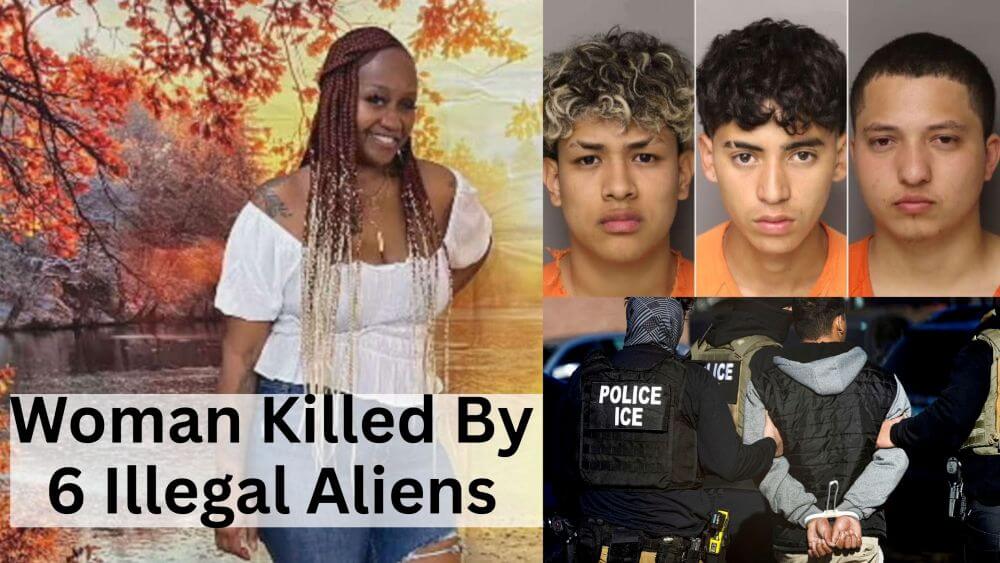
On May 2, 2025, a 40-year-old mother of two, Larisha Sharell Thompson, was on her way to visit a friend in South Carolina. She never made it. Her life was cut short, reportedly at the hands of six illegal immigrants from Honduras, ages 13 to 21. The group is now charged with her murder.
But it’s what came afterward that made the story even more chilling. According to police, text messages between the suspects showed no remorse. They reportedly joked about the murder with phrases like “mission fail” and “this is only the beginning.” It’s horrifying—not just because of the violence, but because of the cold indifference. No only there was no remorse, but also, the intention to commit the same crime again.
Why This Story Matters
This isn’t just another tragic crime story. It’s a wake-up call. According to ICE (Immigration and Customs Enforcement), none of these individuals were supposed to be in the United States. That fact alone has reignited a national debate about illegal immigration, public safety, and the role of law enforcement.
Of course, crime isn’t exclusive to undocumented immigrants. Citizens commit crimes, too. But when people who aren’t even supposed to be in the country take innocent lives, it raises a serious question: Are we doing enough to protect our communities?
The Role of ICE: Prevention, Not Just Punishment
Many people think ICE exists solely to punish. But its mission is fundamentally about prevention—identifying and removing individuals who pose a threat before they harm others. In recent years, ICE has deported or detained hundreds of individuals with criminal records, many of whom had previous convictions. In other words, some of these tragedies were preventable.
Think of it like this: if someone is already breaking the law by being in the country illegally—and then goes on to commit violent crimes—it’s a double failure of the system.
A Question of Priorities
Some critics say deportation is inhumane, or that we should be more focused on the root causes of crime. Others point out that immigrants contribute economically to the country, which is true. But we also need to ask: What is the cost of doing nothing?
When someone like Larisha Thompson dies, the loss isn’t just personal—it’s societal. Her children lost their mother. Her community lost a neighbor. Her friends lost someone they loved. No economic argument can bring her back.
The Bigger Picture
Research from the Migration Policy Institute and other organizations shows a clear pattern: areas with stronger immigration enforcement tend to see lower crime rates. That’s not political spin—it’s data. And it makes sense. If criminals know they’re likely to be caught and deported, they’re less likely to take that risk.
It’s also worth noting that many criminal immigrants had prior records that were missed or ignored. In those cases, earlier intervention could have saved lives.
This Is Not About Blaming All Immigrants
Let’s be clear: this isn’t an attack on immigrants as a whole. Most come to this country seeking a better life, and many contribute in meaningful ways. But illegal immigration mixed with criminal behavior is a specific issue—one that can’t be ignored in the name of political correctness.
It’s not racist or xenophobic to demand safety. It’s common sense.
Final Thoughts
What happened to Larisha Thompson is a tragedy that should never have occurred. Her death is a painful reminder that immigration policy isn’t just about economics or politics—it’s about people. Real people. With real lives, real families, and real futures.
We need to face hard truths: some people come to this country illegally and cause harm. And when they do, we owe it to our citizens—especially the most vulnerable—to respond with seriousness and resolve.
The work of ICE may not be popular in some circles. But in a world where one mother can be taken from her children so senselessly, it may just be necessary.
Other Law Posts