If you close your eyes and look back 5 or 10 years, would you say that you’ve changed? Have you improved in any way—or are you essentially the same person you were back then?
Now close your eyes and look 5 or 10 years into the future. Will you be the same person you are today, or will you be someone different?
We Can Choose Who We Want to Be
Our personalities are not permanent. We are continuously changing, and we can decide what kind of past, present, and future we want to have.
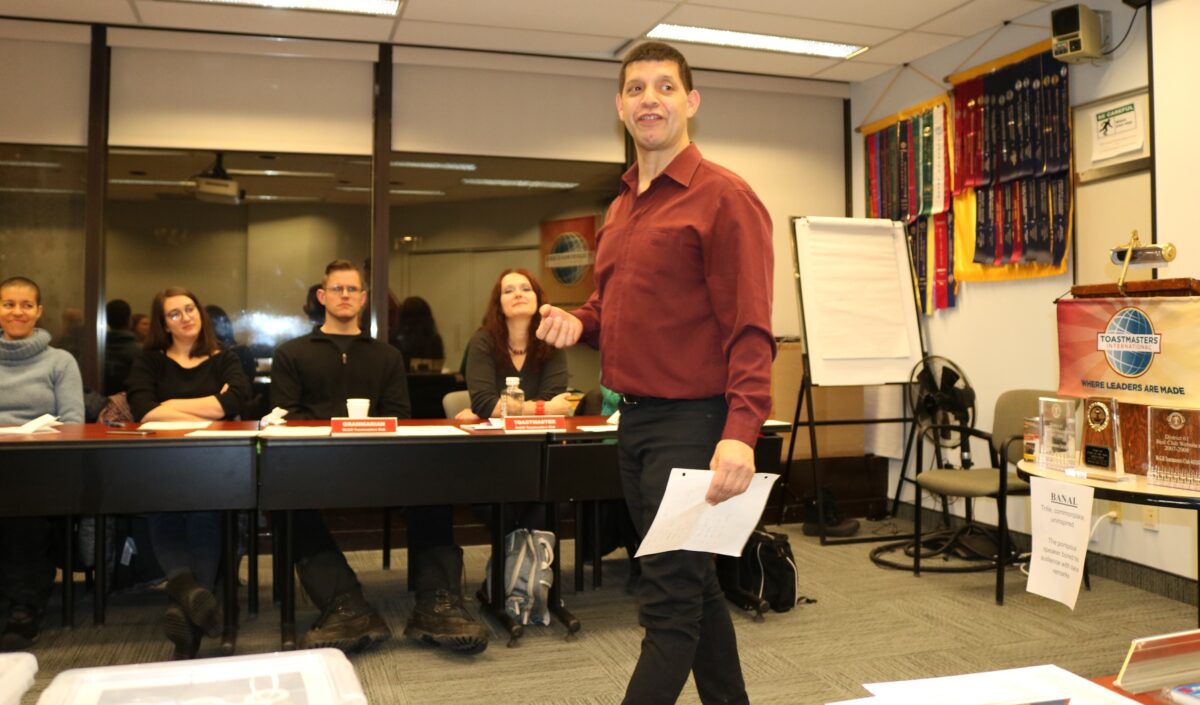
Six years ago, I joined McGill Toastmasters Club, a public speaking club.
At the time, I was petrified to speak in public. My hands were sweating, my voice was cracking, my eyes were watering, and my speeches were terrible.
Today, I feel comfortable speaking every week. I host a podcast, and I recently started a YouTube channel.
The person I was six years ago is not the same person I am today. And the person I am today will not be the same person I’ll be five years from now. The only real question is: will I be a better person or a worse one?
The Path to Becoming Better
If we want to become better versions of ourselves, we must:
- Constantly be learning, even if it’s for learning’s sake
- Constantly try something new
- Constantly try things that are outside of our comfort zone
Research in psychology consistently shows that growth happens when we operate just beyond what feels comfortable.
When we do this every day, we have no choice but to improve. We become—almost by default—the person we want to become.
We Can Re‑Write the Past
One of the biggest obstacles to building a better life is how we interpret our past experiences. But we can revisit the past and give it a new meaning—and in doing so, create a better future.
The past is not something that happened to you; it’s something that happened for you.
I choose the lens through which I see the past.
One of the worst—and best—decisions of my life was going to university.
The Negative Interpretation
- I didn’t learn any marketable skills (everything felt abstract and disconnected from real life)
- I didn’t have much fun (I worked as a janitor to pay tuition and books)
- I didn’t see a financial return on my investment
- The opportunity cost in time, money, and fun was enormous
A Better Interpretation
As an immigrant, being admitted to university gave me a legitimate path to immigrate to a country where I eventually found happiness and built my life.
Both interpretations are true. The difference lies in which one I choose to focus on.
It’s up to us to evaluate the present
Imagine that after I give a speech, my friend Louise‑Véronique evaluates me.
She points out everything I could have done better—my tone, my accent, the structure, the content. She doesn’t mention what I did well.
I get to choose how I interpret her feedback.
I could decide that she dislikes me, or that I’m a terrible speaker.
Or I could decide that she cares enough about me to invest her time in helping me improve, so my next speech will be better than the last one.
The same applies to everyday life.
If someone insults me because I’m Latino and speak with a Spanish accent, I can choose to feel hurt—or I can feel compassion for the limited education and exposure that shaped that person.
Conclusion
We can change our past, our present, and our future—not by changing events, but by changing how we interpret them. We can grow, or we can shrink. The choice is always ours.
Summary
Becoming the person you always wanted to be is not about overnight transformation. It’s about daily choices: learning continuously, stepping outside your comfort zone, and choosing empowering interpretations of your past and present. Your identity is not fixed—it’s something you actively create.
Frequently Asked Questions (FAQ)
Can people really change their personality?
Yes. Research in psychology shows that personality traits are flexible over time, especially when people intentionally adopt new habits, environments, and ways of thinking.
How do I reinterpret my past without lying to myself?
Reinterpreting the past doesn’t mean denying facts—it means choosing a meaning that empowers you instead of one that limits you. Multiple interpretations can coexist; choose the one that helps you grow.
What if stepping outside my comfort zone feels overwhelming?
Growth doesn’t require extreme leaps. Small, consistent actions just beyond your comfort zone compound over time and lead to meaningful change.
How long does personal transformation take?
Personal growth is ongoing. You may notice small changes in weeks or months, but meaningful transformation is the result of years of consistent effort.