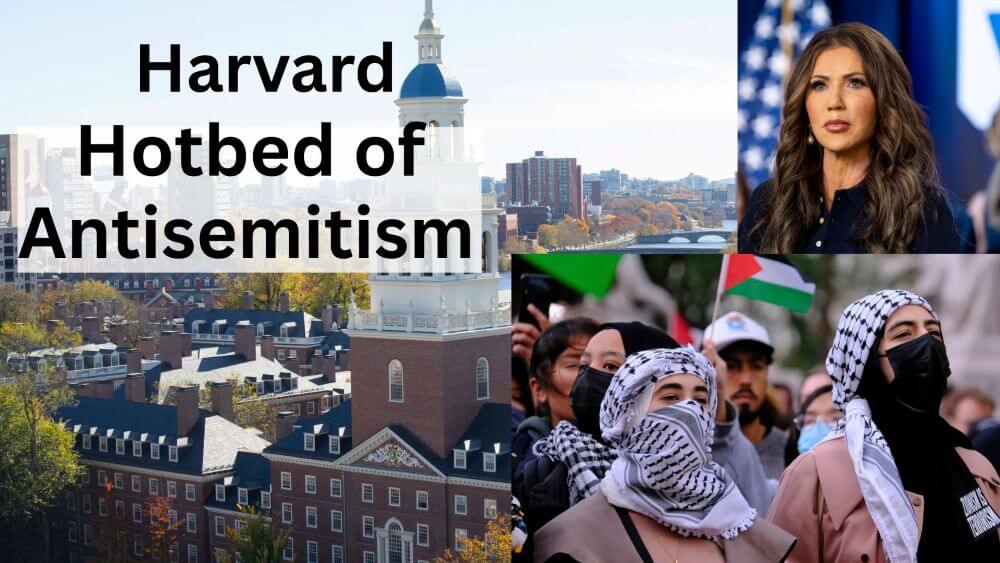
Harvard University, once a beacon of academic excellence and a symbol of American intellectual leadership, is now at the center of a firestorm involving national security, rising campus extremism, and an increasingly tense standoff with the federal government.
Last week, the Trump administration announced the immediate revocation of Harvard’s Student and Exchange Visitor Program (SEVP) certification, effectively banning the university from enrolling international students. The U.S. Department of Homeland Security, under the direction of Secretary Kristi Noem, delivered a direct message: cooperate fully with federal oversight or lose the privilege of hosting foreign students.
This drastic move comes amid growing concerns that Harvard has become a hotbed of radical, anti-Israel, and even anti-American rhetoric, with increasing reports of campus protests aligning with Hamas sympathies. While free speech is protected under the Constitution, the government argues that Harvard has crossed into dangerous territory by failing to monitor or control activities that may incite violence, hatred, or antisemitism.
What Prompted This Escalation?
According to Secretary Noem, the federal government requested comprehensive documentation from Harvard, including records of student backgrounds, reports of criminal activity, and video/audio evidence of protest behavior going back five years. Harvard allegedly refused to comply, prompting a decision that could affect nearly 25% of its student population—those in the U.S. on student visas.
In her statement, Noem emphasized the importance of federal oversight in maintaining campus safety:
“We’ve asked them for the backgrounds on students… any video or audio footage they have of this violent activity. They have just simply not complied.”
She added that foreign students would now be required to transfer to another certified institution or leave the country. Noncompliance could result in the revocation of their visa status and subsequent deportation.
A Turning Point for U.S. Higher Education?
This unprecedented action raises important questions about the role of elite universities in American society. Should institutions of higher learning cooperate more fully with national security demands? Are they responsible for maintaining ideological neutrality, or should they be free to foster radical expression, even when it crosses into hate speech?
While some critics view the federal government’s action as authoritarian overreach, others see it as long-overdue accountability. Harvard, a privately run institution that benefits from federal funding and visa privileges, cannot claim immunity from the law. At a time when antisemitism is spiking and American values are being challenged on campuses across the country, it is reasonable for the government to demand transparency and cooperation.
Why This Matters to the American Public
Antisemitism isn’t just a Jewish problem—it’s a societal problem. When hate is allowed to fester on elite campuses under the guise of “academic freedom,” it sets a dangerous precedent. Harvard’s refusal to comply with reasonable oversight measures isn’t just an administrative dispute—it’s a matter of national cohesion and public safety.
International students contribute immensely to American innovation and culture, but they do so under the terms of a visa program that demands both institutional and student accountability. If Harvard chooses not to play by the rules, it should not be shielded from the consequences.
The Path Forward
The Trump administration has left the door open. Harvard can regain its certification by complying within 72 hours—providing the requested documentation and demonstrating a willingness to cooperate. This isn’t a cancellation of foreign students; it’s a call to enforce standards that protect everyone on campus—foreign and domestic.
I think this is the right move, taken by the Trump administration of holding powerful institutions accountable when they fail to address extremism within their walls. Cooperation should be a given, not a negotiation.
Harvard must decide—will it stand with the American people and work to reduce the spread of hate on campus, or will it continue to defy federal oversight and risk further isolation?
Previous opinion posts