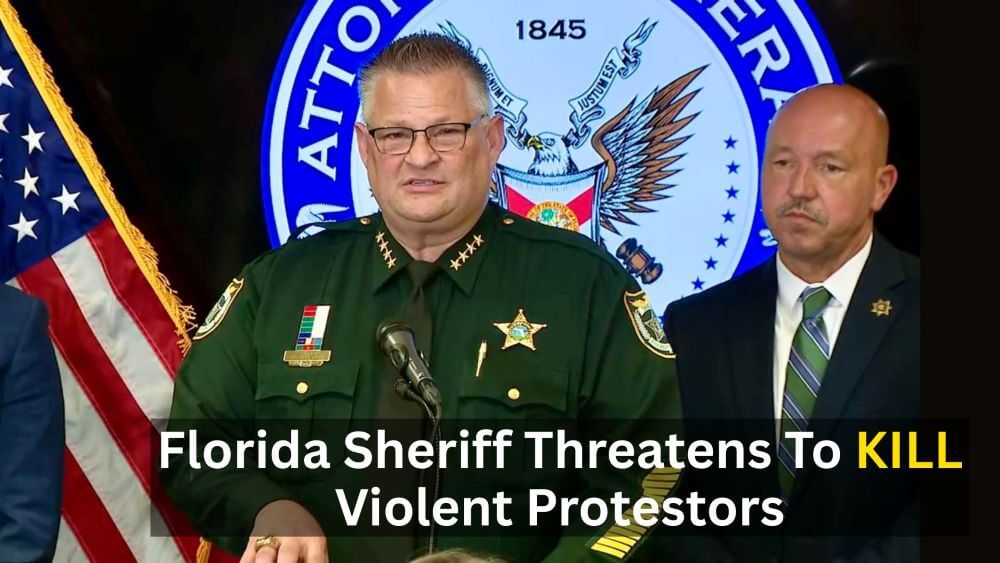
In a country where the right to protest is a cornerstone of democracy, Florida has taken a firm stance: freedom of speech is protected—but lawlessness is not. As anti-ICE protests continue to rise across the country, some of which have turned violent in major cities, Florida is making headlines for its no-nonsense approach.
I believe it’s fantastic that people are passionate and engaged enough to protest. Speaking out is part of what makes democracy strong. But I also believe those protests should respect the rule of law. Florida’s approach reflects that balance—and it’s worth taking a closer look.
What Florida Officials Are Saying
Brevard County Sheriff Wayne Ivey made national news with a strong warning ahead of protests planned for June 14. His message? Peaceful protests are welcome. Violence is not.
“If you throw a brick, a firebomb, or point a gun at one of our deputies, we will be notifying your family where to collect your remains. Because we will kill you—graveyard dead,” said Ivey.
This is the kind of tough rhetoric that leaves no room for ambiguity. Sheriff Ivey continued, emphasizing that blocking roads, spitting on officers, or mobbing vehicles would result in arrests—or worse.
“If you try to mob rule a car in Brevard County… you’re most likely going to get run over and dragged across the street,” he warned.
Clearly, Florida law enforcement is taking a strong defensive posture—not to suppress speech, but to protect public order and safety.
Governor DeSantis: Peaceful Protest Is Fine—Violence Is Not
Governor Ron DeSantis has echoed these sentiments in multiple appearances, including The Rubin Report and The Ingraham Angle.
In his view, commandeering public streets and creating chaos is not protected behavior. His zero-tolerance policy for violence is rooted in a simple principle: protest all you want—but do it peacefully.
“You have no right to commandeer streets. That has a serious impact on people’s quality of life,” DeSantis said. “You may be blocking a parent trying to pick up a child, or someone rushing to a hospital. That’s why we have a strict zero tolerance policy.”
He also emphasized that Floridians have the right to defend themselves. If a driver feels threatened by a violent mob, they have legal protection to flee—even if someone gets hurt in the process.
Holding People Accountable
DeSantis also contrasted Florida’s enforcement with other states that, in his view, are too lenient.
“In Florida, if you riot, loot, or engage in violence—even mild—you’re going to jail,” he said. “You won’t be treated like in Portland, where you get a slap on the wrist and go right back on the street.”
Critics may argue that this stance discourages protest, but the governor is quick to point out that Florida has had plenty of protests—many of them critical of his administration—and they were allowed to proceed peacefully.
Final Thoughts
As someone who believes in civic engagement and free speech, I applaud people who take a stand and voice their opinions. But I also respect the need for law and order. You can’t demand justice by endangering others or destroying property. Florida’s approach—protect peaceful protest while cracking down on violence—seems to strike that difficult but necessary balance.
Whether you agree with the policy or not, one thing is clear: in Florida, the message is simple—protest peacefully, or face the consequences.
Previous Politics posts