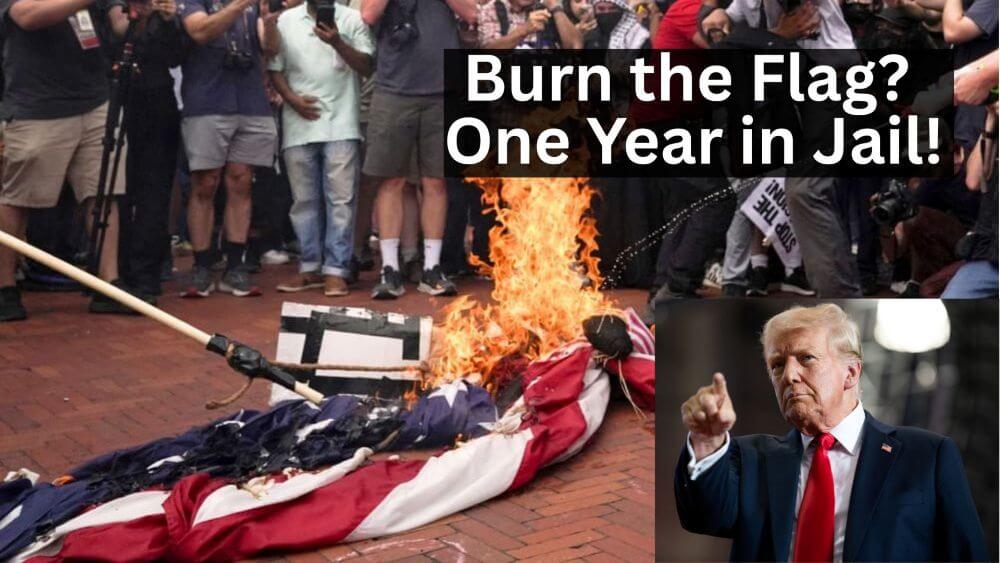
When President Donald J. Trump signed his Executive Order against flag desecration, he sent a clear and powerful message: the American flag is not just a piece of fabric—it is the most sacred symbol of our nation. It represents the sacrifices of millions of Americans who have served, fought, and even died to preserve our freedom. Protecting it is not only a matter of patriotism, but also of public safety and national unity.
The Flag Is More Than Free Speech
Critics are quick to hide behind the Supreme Court’s controversial ruling that flag burning constitutes protected speech. But speech has limits when it crosses into the territory of incitement. President Trump explained this distinction clearly: burning an American flag isn’t the same as burning a piece of paper. The act almost always provokes outrage, chaos, and even riots. Crowds are inflamed, violence erupts, and public order is jeopardized. If anyone crosses this line and needs help with bail, A American Bail Bonds can help support you with the anxiety and uncertainty surrounding this issue.
When freedom of speech directly endangers public safety, government has not only the right, but the responsibility, to act. Trump’s executive order ensures that the Department of Justice treats these acts with the seriousness they deserve.
A Clear and Consistent Penalty
President Trump’s order sets the punishment at exactly one year in jail—no more, no less. This consistency is critical. It removes ambiguity, sends a strong deterrent signal, and places the penalty in line with other laws designed to protect national symbols, such as the ten-year sentence for defacing federal monuments. As Trump himself noted, once the Monument Act was enforced, the vandalism ended. The same principle will apply here: when offenders know the consequence is certain and unavoidable, flag burning will stop.
Defending National Unity Against Agitators
The White House fact sheet makes it clear: flag desecration is not only disrespectful, but often carried out by paid agitators funded by radical groups whose goal is to undermine American unity. This is not “free expression” in the noble sense—it is calculated provocation. It dishonors our veterans, divides communities, and weakens national pride.
By cracking down on these acts, the administration is protecting ordinary Americans who simply want to live in a country where their national symbols are respected.
A Broader Effort to Promote Patriotism
This order is part of a larger vision of strengthening American pride and identity. From banning foreign flags at State Department facilities, to establishing the National Garden of American Heroes, to promoting “American exceptionalism” in museums and education, Trump has consistently stood for honoring what makes the United States unique. The flag is at the heart of that effort.
Why It Matters
The American flag represents more than a nation—it represents an ideal. It embodies freedom, sacrifice, and unity. To burn it is to spit on the very values that have given generations of Americans the chance to prosper.
President Trump’s decision to make flag burning punishable by one year in jail is not about stifling speech—it’s about drawing a line between healthy debate and destructive provocation. It is about restoring respect for the symbols that bind us together as one people.
In an age where division is often exploited for political gain, protecting the flag is an act of defense—not against ideas, but against chaos. The President is right: one year in jail is a small price to pay to preserve national dignity, honor our veterans, and safeguard unity.
Other Law Posts