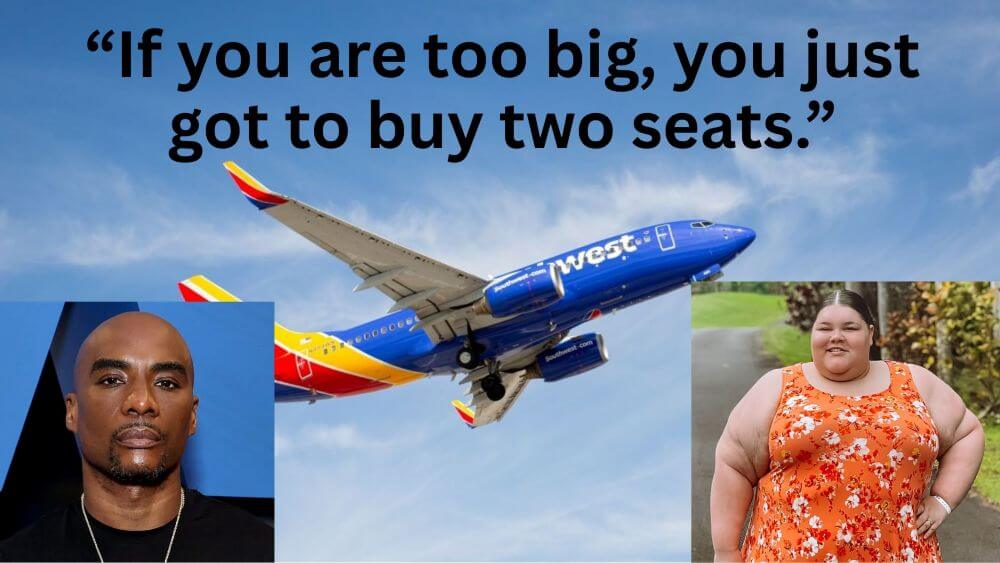
As someone who often writes about personal responsability, justice, and fairness, I couldn’t ignore the recent buzz around Southwest Airlines’ upcoming policy changes and the fiery comments from radio host Charlamagne tha God. It’s a topic that touches on fairness, health, and even airline economics—one of the biggest expenses for airlines is fuel, and weight plays a direct role in that.
The Core Argument: Weight Affects Fuel, So Why Not Price It Fairly?
Airlines strictly weigh and charge for luggage because extra weight means more fuel burned. The same physics applies to passengers: a heavier load requires more energy to get the plane off the ground and keep it in the air. Yet, while a 100-pound traveler pays the same base fare as a 300-pound one (plus their luggage), the heavier passenger contributes more to fuel consumption.
Is this fair? Many would say no. If we’re charging for heavy suitcases to offset costs, why subsidize heavier passengers by having everyone pay the same? Some airlines, like Samoa Air in the past, have experimented with pay-by-weight models (passenger + luggage combined), and studies show it could reduce fuel use and emissions. Passenger weight variations are real—average weights have risen over decades—and ignoring them means lighter passengers indirectly pay more.
But full pay-by-weight pricing is controversial: it could discriminate, complicate bookings, and face backlash. No major U.S. airline does it today, partly for practical and social reasons.
Southwest Airlines’ Shift: A Step Toward Accountability
Starting January 27, 2026, Southwest is making big changes:
- Ending its famous open seating for assigned seats.
- Updating its “Customer of Size” policy: Passengers who “encroach upon the neighboring seat(s)” (i.e., can’t lower both armrests comfortably) must proactively purchase an additional seat in advance.
Previously, Southwest was generous—plus-size passengers could often get a free extra seat at the gate or buy one and get refunded later, even on full flights. Now, you buy upfront, and refunds are stricter (e.g., only if the flight departs with open seats, requested within 90 days, same fare class).This aligns with the transition to assigned seating but addresses long-standing complaints about space encroachment. It’s not full weight-based pricing, but it requires those needing more room to pay for it—similar to how tall people pay extra for legroom.
Charlamagne tha God’s Blunt Take Sparks Debate
Radio host Charlamagne tha God didn’t hold back on The Breakfast Club. Discussing the policy, he said:
“If you are too big for one seat, then you just got to buy two seats. Don’t act like the plane is doing something to you. You know how big you are!”
He joked about flying cargo, told heavier folks to “stop eating so much bread,” and compared it to tall people buying extra legroom. His punchline: As Southwest cuts costs, make your New Year’s resolution to cut weight.
His comments went viral—some cheered the tough love, others cried body-shaming. With U.S. adult obesity around 40% (per recent CDC data from 2021-2023 surveys), it’s a sensitive issue. Charlamagne’s point: Personal responsibility matters, and encroaching on others’ paid space isn’t fair.
Critics argue obesity has complex causes (genetics, access to healthy food, etc.), and shaming doesn’t help. Advocates for plus-size travelers worry this makes flying harder and more expensive.
My Take: Fairness Over Feelings?
I side with fairness here. Airplane seats are a fixed resource—if someone needs two, they should pay for two, just like extra luggage. It’s not about shaming; it’s about equity. Lighter or average-sized passengers shouldn’t have their comfort (or safety) compromised, nor subsidize others’ space.
That said, airlines could do better: Design wider seats optionally, or offer true weight-based fares (with discounts for lighter travelers). But until then, policies like Southwest’s are a reasonable middle ground.
Obesity is a health epidemic costing billions—perhaps blunt talks like Charlamagne’s encourage change. In 2026, as resolutions kick in, maybe it’s time for more of us to think about lifestyle choices, not just for flying comfortably but for overall well-being.
What do you think? Should airlines go full pay-by-weight, stick to seat-encroachment rules, or keep subsidizing? Drop your thoughts in the comments—I love hearing from readers!