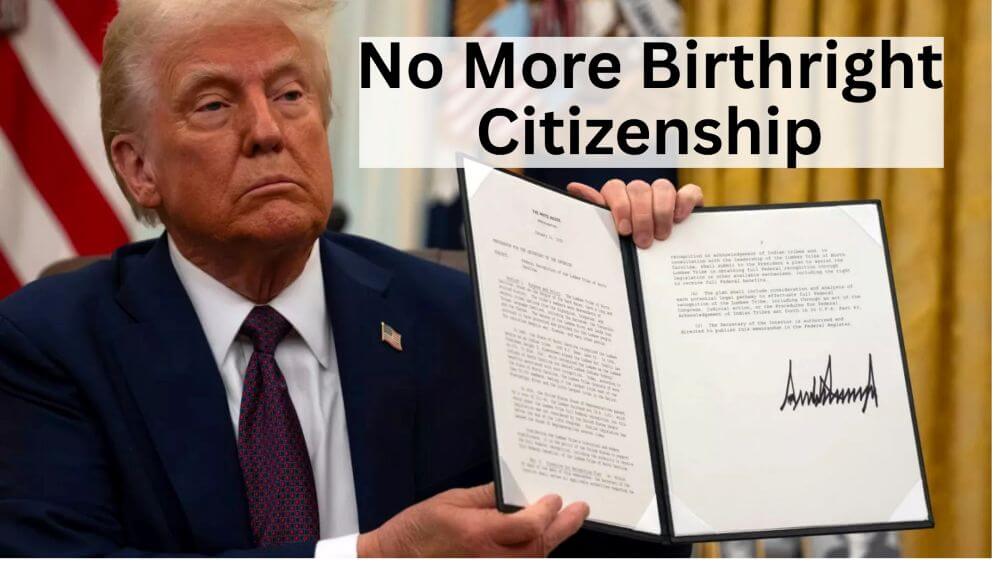
In a landmark decision that will shape the future of U.S. immigration policy, the Supreme Court has recently ruled in favor of President Trump’s authority to pursue an end to automatic birthright citizenship for children born to non-citizens. This long-awaited ruling is not just a political win—it’s a victory for national sovereignty, common sense, and the responsible management of American identity and resources.
For decades, the United States has offered one of the most generous interpretations of birthright citizenship in the world. Under the 14th Amendment, anyone born on U.S. soil has been granted automatic citizenship, regardless of their parents’ immigration status. While this may have made sense in the aftermath of the Civil War—when it was crucial to establish the citizenship of formerly enslaved people—it has since become a magnet for exploitation and abuse.
A Policy That Rewards Law-Breaking
President Trump’s challenge to this outdated interpretation is both timely and justified. For years, America has witnessed a growing number of people crossing the border illegally or arriving on tourist visas with the sole intention of giving birth on U.S. soil. The child becomes a citizen; the parents remain and often gain leverage to stay permanently. This practice, commonly referred to as “birth tourism” or “anchor babies,” undermines the integrity of our immigration system and incentivizes law-breaking.
What other country allows such an open invitation to citizenship? The answer is: very few. Most advanced nations have already reformed their citizenship laws to reflect the realities of modern migration. The United Kingdom, Australia, France, and Germany all require at least one parent to be a citizen or permanent resident. The U.S., by contrast, has clung to a dangerously outdated norm, inviting unintended consequences and overwhelming our public systems.
The Constitutional Misinterpretation
Critics argue that the 14th Amendment guarantees birthright citizenship. But this is a simplistic reading of the clause “subject to the jurisdiction thereof.” Legal scholars across the spectrum have pointed out that this phrase was never intended to cover individuals who owe allegiance to a foreign government—such as illegal immigrants or foreign tourists. The original drafters of the amendment could not have foreseen a globalized world where citizenship is used as a loophole rather than a commitment.
Thanks to this Supreme Court ruling, we now have the opportunity to correct this misreading. The decision doesn’t strip citizenship from existing Americans, as some fear. Instead, it clarifies that citizenship is a privilege granted by a sovereign nation—not an accident of geography.
A Step Toward Fairness and Fiscal Responsibility
Ending birthright citizenship for non-citizens is not about cruelty or exclusion; it’s about fairness. Legal immigrants who follow the rules, pay taxes, and contribute to the nation’s development are often frustrated when they see others gain permanent footholds through legal gray areas. Reforming the system restores fairness and ensures that citizenship reflects commitment, not convenience.
Moreover, this policy shift can help ease the financial burden on U.S. taxpayers. Each year, billions of dollars are spent on education, healthcare, and welfare programs for the children of undocumented immigrants. Ending automatic citizenship reduces these costs and encourages a more merit-based, lawful approach to immigration.
Conclusion: A Bold but Necessary Reform
President Trump’s efforts to end birthright citizenship may be controversial, but they are undeniably bold and grounded in a desire to uphold the rule of law. With the Supreme Court now affirming his authority to act, America has a chance to modernize its citizenship laws and regain control over who becomes part of the national fabric.
This isn’t just about immigration—it’s about defining what it means to be American. Citizenship should be earned, not handed out indiscriminately. In standing up for this principle, President Trump has taken a critical step toward restoring integrity to one of our nation’s most important institutions.
Other Law Posts