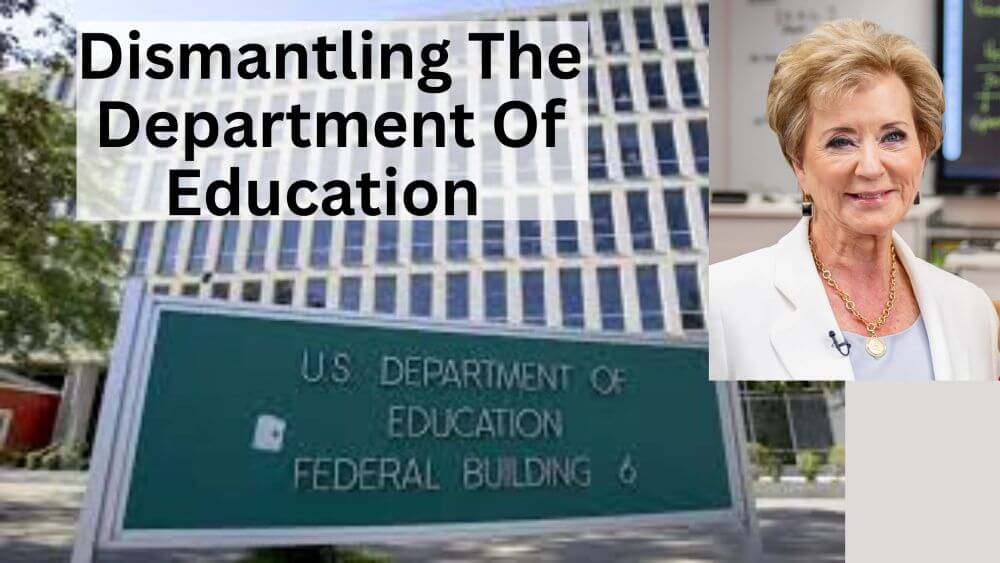
For decades, we’ve been told that more money and more federal oversight would lead to better educational outcomes in the United States. But the numbers—and the reality in classrooms across the country—tell a very different story.
As newly appointed Education Secretary Linda McMahon pointed out:
“The Department of Education was set up in 1980. We have now spent as a country over $3 trillion to watch the performance of our students continue to decline… I don’t think that education that is handled from a bureaucratic position in Washington, D.C., is best for the states.”
It’s a bold statement. But it’s also a truth that millions of parents, teachers, and students have felt for a long time: our centralized education system is broken. Maybe it’s time we do something radical—cut the bureaucracy and return education to the states.
1. $3 Trillion and Declining Results
The U.S. spends more on K–12 education per student than almost any other country—$16,000 to $18,000 per year, far more than the OECD average. Yet American students routinely score in the middle or lower half in international assessments of reading, science, and math.
We’re not underfunded. We’re over-centralized and mismanaged.
2. One-Size-Fits-None
Education isn’t the same in rural Alabama as it is in downtown Boston or suburban Colorado. But a bureaucracy in Washington tries to create national solutions for local problems.
Giving states full control allows them to:
- Tailor curricula to reflect local needs and values.
- Innovate with new models (like charter schools, vocational education, and digital learning).
- Be directly accountable to local taxpayers, not distant bureaucrats.
3. The Federal Government Shouldn’t Dictate Education
The U.S. Constitution doesn’t mention education. It was historically a state and local issue—and it worked better that way. The Department of Education wasn’t created until 1980. In the 40+ years since, student performance has declined despite rising costs.
What we’ve built is a giant compliance machine—a network of mandates, paperwork, and top-down regulations that teachers and schools must navigate, often at the expense of actual teaching.
4. McMahon’s Plan: Keep the Funding, Cut the Bureaucracy
Critics are worried that eliminating the Department of Education means cutting essential funding. But McMahon made it clear:
“Title 1 funding and IDEA funding for our disabled and social needs students… will all continue to go to the states. It might go through a different agency or may go directly to the states. But education, I think, is going to have more funding going directly to the students, which is where it should be.”
In other words: students will still get the support they need, but the money won’t have to take a detour through an inefficient bureaucracy in Washington.
5. States as Laboratories of Innovation
When states have power, they can experiment. Some will fail. But others will succeed—and those models can be adopted by others. That’s the beauty of a decentralized system.
We already see this today:
- Massachusetts leads the nation in academic achievement.
- Arizona has pioneered expansive school choice programs.
- Florida has made gains through charter school expansion and accountability.
These successes happened not because of Washington—but in spite of it.
Conclusion: Education Should Be Local
Education is too important to be dictated by distant bureaucrats with a one-size-fits-all playbook. By eliminating the Department of Education and giving power back to the states, we can finally:
- Cut waste
- Unleash innovation
- Give parents more choice
- Focus resources where they matter most—on students
Maybe it’s not about doing more from Washington—but about doing less, better, closer to home.
What do you think? Should education be a federal responsibility, or should it return to the states? Leave your thoughts in the comments below.
Previous Politics posts
- Democratic party is the party of violence
- Why Millions Are Walking Away from the Political Left
- Zero Tolerance in Florida: What Happens When Protests Cross the Line