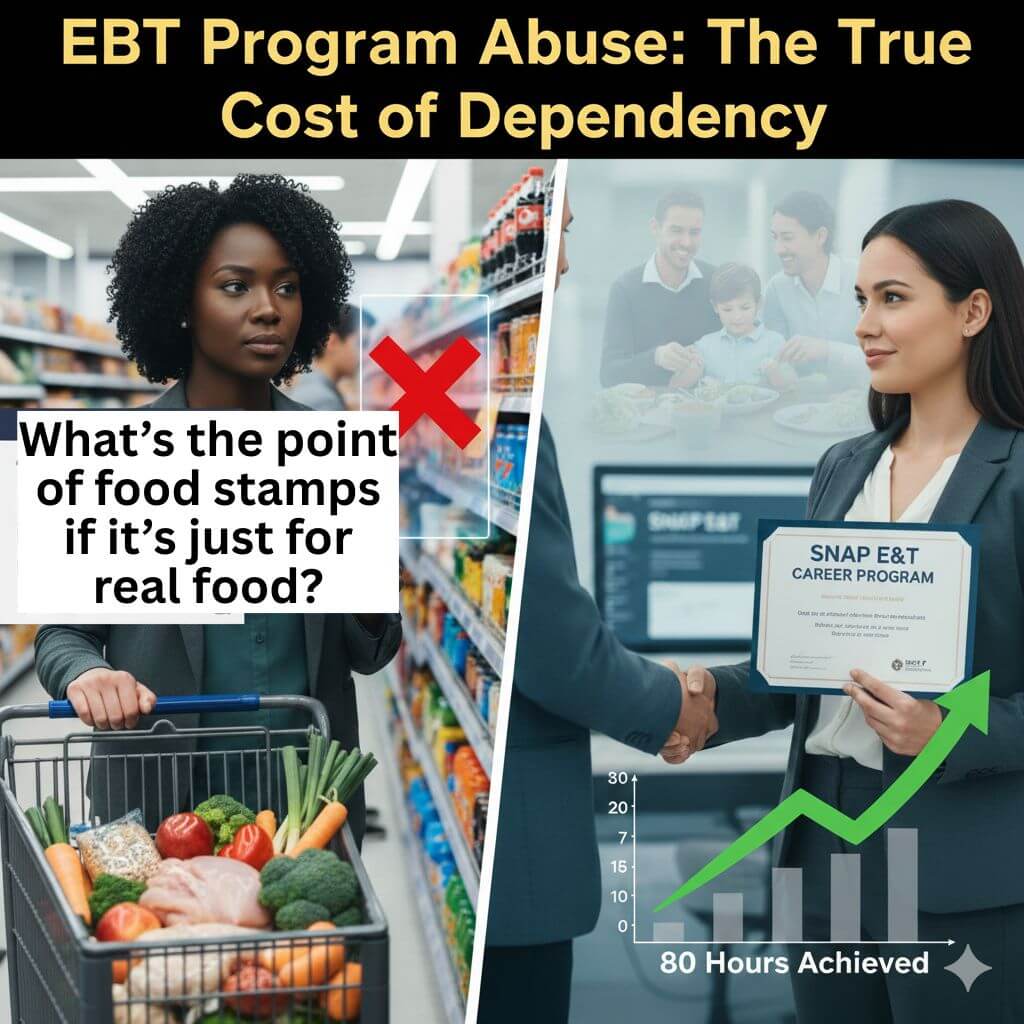
The conversation around EBT program abuse has reached a fever pitch in 2026. What was once designed as a temporary bridge for the truly needy has morphed into a system that many argue rewards dependency over diligence.
Recent viral reports from Missouri highlight a jarring shift in recipient attitudes. When the government tries to steer the program toward actual nutrition, the pushback reveals a deep-seated sense of entitlement that threatens the American work ethic.
The “Real Food” Controversy in Missouri
In late 2025, Agriculture Secretary Brooke Rollins and HHS Secretary Robert F. Kennedy Jr. announced a major shift. Under the Make America Healthy Again (MAHA) movement, six states received waivers to ban the use of SNAP funds for junk food.
The reaction from some recipients was nothing short of a wake-up call for taxpayers. Missouri resident Hannah Moore became a flashpoint for the debate when she questioned the utility of the program if it couldn’t be used for snacks.
“What’s the point of food stamps if it’s just for real food?” Moore asked reporters.
This sentiment perfectly illustrates the core of EBT program abuse. When a subsidy for “nutrition” is viewed as a “fun money” card for soda and candy, the program’s original intent has been completely subverted.
How the “Benefit Cliff” Incentivizes Stagnation
One of the most damaging aspects of the current system is the “Benefit Cliff.” This economic phenomenon occurs when a small increase in earned income leads to a total loss of government aid.
- The Math Trap: A worker receives a $2/hour raise.
- The Loss: That raise pushes them over the income limit, resulting in a $400/month loss in SNAP benefits.
- The Result: The worker is financially worse off for taking the promotion.
This structure creates a rational incentive for EBT program abuse—not necessarily through identity theft, but through the intentional suppression of personal growth. People begin to see hard work not as a ladder, but as a risk to their family’s stability.
Stricter Rules: The One Big Beautiful Bill Act
To combat this culture of dependency, the One Big Beautiful Bill Act signed by President Trump has introduced the strictest work requirements in decades.
- Expanded Age Brackets: Able-bodied adults up to age 64 must now prove they are working or training.
- Mandatory Reporting: Monthly verification of at least 80 hours of labor or community service.
- Nutrition Standards: Phasing out the use of taxpayer funds for sugar-sweetened beverages and high-fructose corn oil products.
Critics argue these rules are “not cool,” but proponents argue they are essential. We must move away from a society where “real food” is seen as a burden and “hard work” is seen as a penalty.
The Hidden Costs of Systemic Dependency
When we talk about EBT program abuse, we have to look at the health of the nation. RFK Jr. has noted that three in five Americans suffer from chronic diseases.
By allowing SNAP to fund the very foods that cause these diseases, the government is paying twice: once for the soda, and again for the Medicaid costs to treat the resulting diabetes. It is an unsustainable cycle that fuels a society of dependents.
Summary: Time for a Total Overhaul?
The current state of the EBT program suggests that tweaks may no longer be enough. When recipients mock the requirement to buy “real food,” the culture of the program is broken.
We need a system that:
- Prioritizes actual nutrition over “cool” snacks.
- Eliminates the Benefit Cliff to reward every dollar earned.
- Enforces work requirements to ensure the safety net remains a bridge, not a hammock.
FAQ: Understanding EBT and SNAP Reforms
What is considered EBT program abuse? It ranges from “trafficking” (selling benefits for cash) to “lifestyle abuse,” where recipients intentionally stay under income limits to keep benefits.
What are the new SNAP work requirements for 2026? Able-bodied adults up to age 64 must work or participate in a work program for at least 80 hours per month.
Can I still buy soda with EBT in 2026? In states like Missouri that have adopted MAHA waivers, sugary drinks and candy are no longer eligible items.
Leave a Reply