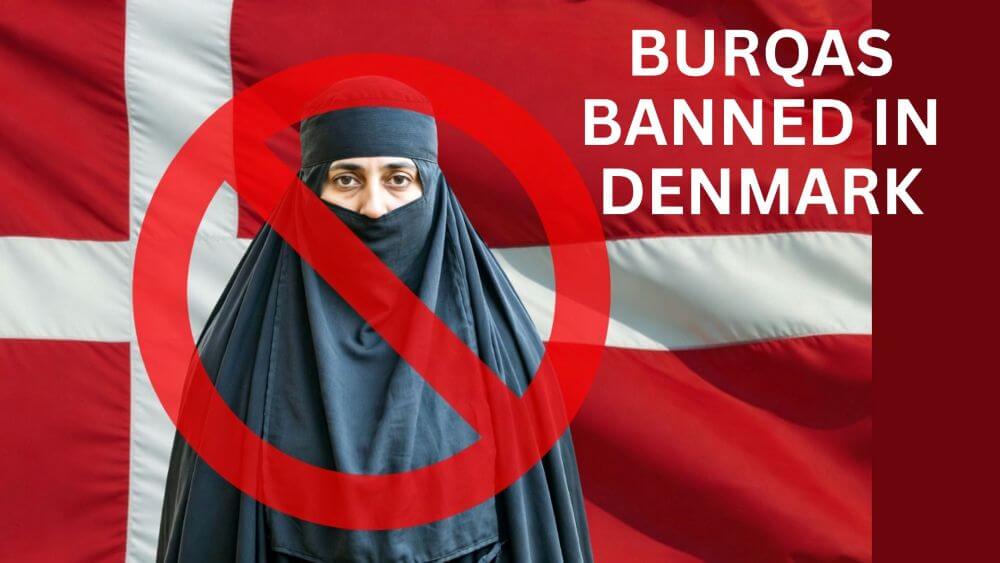
As we wrap up 2025, it’s refreshing to see a nation take a bold stand for its own culture and values. Denmark has just made headlines with a December 2025 proposal to extend its 2018 burqa ban to schools, enforcing visibility for security and integration purposes. This isn’t just a policy tweak—it’s a clear message: If you cover your face in public, you’ll pay the price. Burqas, niqabs, balaclavas, and similar coverings now carry a fine of 1,000 DKK (about €134 or $157 USD) for the first offense, escalating to 10,000 DKK (about €1,340 or $1,570 USD) for repeats. Congratulations, Denmark! In a world drowning in forced multiculturalism, you’re showing the spine that others lack.
At some point, nations must draw the line to protect their heritage. The pattern is all too familiar: Muslim refugees arrive seeking asylum and aid from generous host countries, only to turn around and push their own culture, beliefs, and values onto everyone else. This is profoundly unfair. You come as guests asking for help, yet demand the hosts bend to your ways? No more. Denmark gets it, joining a growing list of resistors like the U.S., Japan, Hungary, and Poland. It’s not about hate; it’s about fairness and self-preservation.
This move stems directly from the 2015 migrant crisis, when Denmark saw 21,000 asylum seekers flood in. Since then, the country has admitted around 150,000 non-Western immigrants. The costs? Staggering. According to Statistics Denmark, net welfare expenses for this group have surged 75% to €4.5 billion annually (roughly $5.27 billion USD), burdening taxpayers who fund a system that’s being exploited. Informal sharia councils have popped up in enclaves, knife crimes have tripled in migrant-heavy areas like Nørrebro, and integration has faltered. Denmark’s response? Realism over rhetoric. They’ve deported 1,300 “unintegrable” individuals in 2024 alone, slashed asylum approvals by 86%, and seen national crime rates drop 3% post-restrictions.
Public support is overwhelming—polls show over 70% approval, and on X (formerly Twitter), viral posts on the topic are racking up tens of thousands of views, with informal polls hitting 80%+ “yes” in replies. Yet, groups like Human Rights Watch call it discriminatory against Muslim women. Respectfully, that’s missing the point: This isn’t targeting faith; it’s about security, integration, and rejecting demographic dynamite disguised as diversity.
Here’s the heresy that elites won’t admit: Multiculturalism, as pushed by figures like Angela Merkel with her 2015 “Wir schaffen das” slogan, has been a disaster. It opened the gates to 1.1 million migrants—mostly young men from cultures where women are often subjugated and non-believers are suspect. The fallout? Cologne’s infamous New Year’s Eve mass assaults, London’s dozen annual honor killings, and Sweden’s prisons where 33% of inmates are foreign-born. Denmark is the canary in the coal mine, opting for “Danish values or Danish dollars”—no more subsidizing those who undermine the host society.
And X is exploding because Americans see the mirror image in our own backyard. Sanctuary cities turning into mini-caliphates, where ICE agents get ambushed and mayors virtue-signal “refugees welcome” amid rising body counts. It’s a wake-up call: Tolerance without boundaries is suicide.
Looking ahead, by 2027, expect France and Italy to follow suit with copy-paste policies. Germany might fracture first—the AfD party is polling at 20.8%, with riots brewing in Berlin. The EU will sue, but the people? They’ll revolt before relenting. Assimilation is dead; it’s now about who conquers whom. Europe is finally waking up, though it took a Viking-sized hangover to realize the longships had already docked.
Kudos to Denmark for leading the charge. Your burqa ban isn’t a purge—it’s a protection. In the end, nations that forget to defend their culture risk losing it entirely. Let’s hope more countries take note before it’s too late.