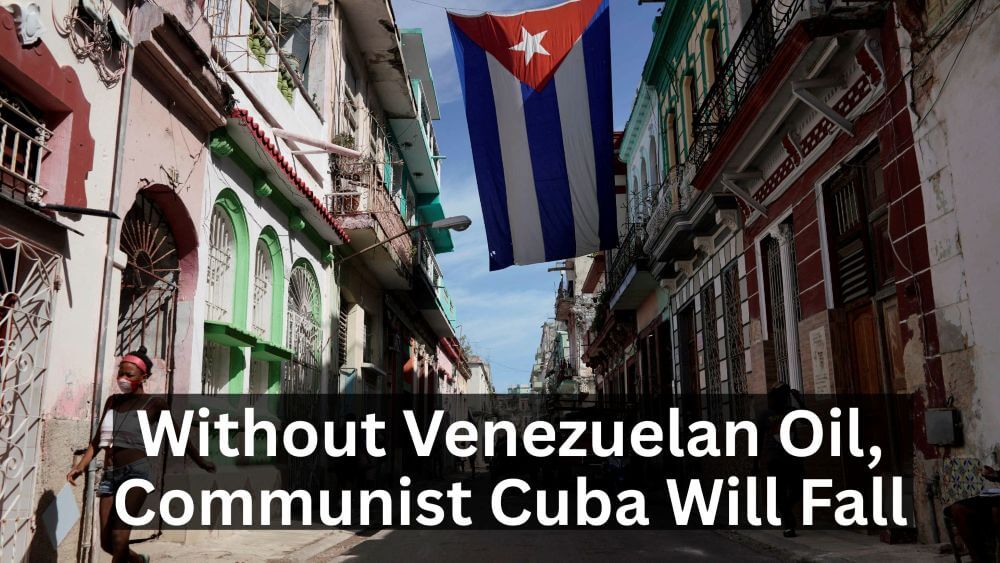
For over sixty years, the Cuban regime has performed a masterful balancing act, surviving the collapse of the Soviet Union by finding new “benefactors” to foot the bill for its failed socialist experiment. But the music has finally stopped.
Following the dramatic arrest of Nicolás Maduro by U.S. forces this weekend and the subsequent collapse of the Chavista leadership in Caracas, the “lifeline” that kept Havana breathing has been severed.
The End of the “Free Oil” Era
For the last two decades, the single most important pillar of the Cuban economy was the subsidized oil-for-doctors swap with Venezuela. Even as Venezuela’s own production plummeted, they were still shipping roughly 30,000 to 50,000 barrels of oil per day to the island.
As of January 3, 2026, those shipments have hit zero.
With the U.S. now effectively overseeing Venezuelan oil ports and an “oil embargo” in full effect to prevent resources from reaching the old regime’s allies, Cuba has been cut off overnight. Havana does not have the foreign currency to buy oil at market prices. Without this “gift,” the island’s energy grid—already fragile and prone to 18-hour blackouts—is on the verge of total, permanent failure.
A “Huge Problem” in Washington’s Crosshairs
The rhetoric from the Trump administration has turned from economic pressure to an open countdown. Secretary of State Marco Rubio, appearing on Meet the Press this Sunday, was asked point-blank if Cuba is next.
“The Cuban government is a huge problem,” Rubio stated. “I think they’re in a lot of trouble, yes. I’m not going to talk to you about what our future steps are going to be… but it’s no mystery that we are not big fans of the Cuban regime.”
President Trump echoed this sentiment, calling Cuba a “failing nation” and noting that the people have suffered long enough. The message is clear: The U.S. is no longer content with just containing the regime; they are watching it starve of resources until it breaks.
Why This Time is Different
Many skeptics point to the 1990s “Special Period” as proof the regime can survive anything. But 2026 is not 1994:
- No Global Backers: Russia is drained by the war in Ukraine; China is unwilling to subsidize a bankrupt state.
- Internal Desperation: Nearly 90% of Cubans now live in extreme poverty. The “aura of invincibility” was shattered when they watched Maduro, the man they thought was protected by Cuban intelligence, being flown to a New York detention center.
- The Energy Factor: In the 90s, Cuba still had a functional, albeit struggling, infrastructure. Today, the power plants are literal relics. Without oil, there is no electricity; without electricity, there is no water, no refrigeration, and no industry.
The Verdict
The Cuban regime didn’t survive because of the strength of its ideas; it survived because of the depth of its neighbors’ pockets. With Venezuela’s oil gone and a hardline administration in Washington led by a Secretary of State who views the liberation of Cuba as a personal mission, the “domino effect” has finally reached Havana’s shores.
Without Venezuelan oil, Communist Cuba will fall. The only question remains: what comes next?
Previous Politics posts