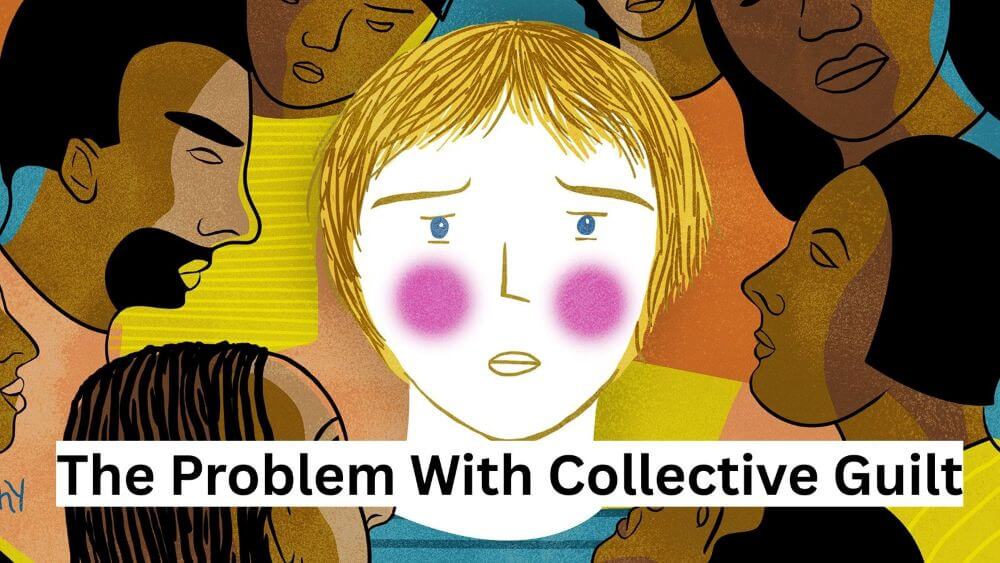
We need to talk about guilt—and why it’s destroying our ability to move forward together.
Here’s the uncomfortable truth: guilt is a terrible foundation for progress.
When people feel attacked for immutable characteristics, they don’t become more empathetic; they become defensive. They dig in. They resist.
And yet, that’s exactly what’s happening.
We’ve shifted from teaching history honestly to assigning collective blame, from acknowledging past wrongs to demanding present-day penance from people who had nothing to do with those wrongs.
No one alive today owned slaves.
No one alive today enacted Jim Crow laws.
But increasingly, conversations about historical injustice feel less like education and more like accusation.
The irony? The same people who correctly argue that individuals shouldn’t be judged by group stereotypes seem comfortable applying collective guilt to others.
This double standard doesn’t promote equality; it breeds resentment.
If we’re serious about unity, we need a different approach:
Teach complete history. Real history shows people of all backgrounds as both flawed and heroic—because that’s what humans are.
Focus on shared values, not differences. What unites Americans isn’t skin color; it’s a commitment to liberty, opportunity, and human dignity. When we emphasize what divides us, we weaken the framework that makes progress possible.
Replace guilt with responsibility—for everyone. Building a just society isn’t one group’s burden; it’s everyone’s shared project.
Create space for complexity. People should be able to acknowledge that their ancestors did harmful things without constantly apologizing for existing.
America’s diversity is a strength—but only when built on mutual respect instead of mutual suspicion, and only when it celebrates what each group contributes rather than keeping score of historical grievances.
We need to retire collective guilt and embrace collective responsibility.
One looks backward with blame; the other looks forward with purpose.
One divides us into camps; the other unites us in a common cause.
This doesn’t mean ignoring injustice—it means addressing it in ways that recognize our shared humanity rather than weaponize our differences.
No one should feel guilty for who they are, but everyone should feel responsible for who they can become.
That’s not just a better way forward—it’s the only way we’ll ever truly get past our divisions.
Other Personal Development Posts