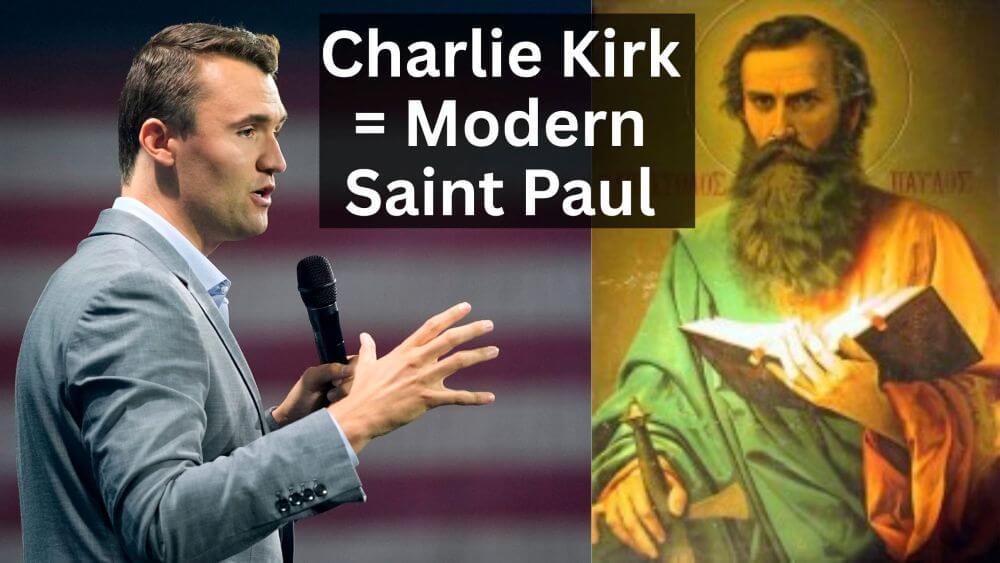
Cardinal Timothy Dolan, one of the most visible leaders of the Catholic Church in the United States, made headlines last week when he compared Charlie Kirk—the conservative activist tragically assassinated on September 10, 2025—to Saint Paul the Apostle. The comments were delivered during a Fox News appearance on September 19, sparking heated discussion about religion, politics, and the use of spiritual analogies in today’s polarized climate.
Dolan’s Perspective: A Modern-Day Missionary
In Dolan’s telling, Kirk was a kind of modern missionary. Through Turning Point USA, the youth-focused political movement he founded, Kirk encouraged young people to embrace Christian values and conservative politics. Dolan praised Kirk’s willingness to speak bluntly on controversial issues, framing it as an echo of Jesus’s teaching that “the truth will set you free.” For Dolan, Kirk’s activism and boldness made him reminiscent of Saint Paul—someone who challenged his generation and spread a radical message.
Who Was Saint Paul?
For context, Saint Paul was one of the most influential figures in early Christianity. Originally a persecutor of Christians, Paul converted dramatically and became a tireless evangelist. He endured imprisonment, persecution, and ultimately martyrdom, all in service of spreading the Gospel. His letters form a substantial part of the New Testament and continue to shape Christian theology today.
When Dolan compares Kirk to Paul, he is not equating their missions one-to-one but drawing a parallel in their style: uncompromising, missionary, and bold.
The Controversy: Faith Meets Politics
Not everyone sees the comparison as appropriate. Charlie Kirk was a polarizing figure. He opposed gay marriage, abortion rights, and diversity initiatives, while promoting Christian nationalism and frequently criticizing Islam. These positions made him a celebrated voice in conservative circles, but also a deeply divisive one.
For many critics—including some within the Catholic community—Kirk’s rhetoric often veered into inflammatory territory, undermining the Church’s teachings on love, dignity, and respect for all people. To them, likening Kirk to Paul is less an honor and more a distortion of Christian values.
The timing adds to the sensitivity. Kirk was assassinated while speaking at Utah Valley University, an act of political violence that has shocked the nation. His death is being mourned by supporters and debated by opponents, and Dolan’s high-profile comparison risks deepening those divides.
Broader Implications
Dolan’s comments also highlight a larger issue: the uneasy intersection of faith and politics in America. The Catholic Church itself is not monolithic—while some leaders lean conservative and embrace figures like Kirk, others warn that Christian identity is being weaponized in service of partisan agendas.
Comparisons to biblical figures are powerful, but they can also be problematic. Saint Paul gave his life to spread the Gospel of Christ, transcending politics and culture. Charlie Kirk, on the other hand, operated squarely in the world of political partisanship. Whether his activism represented Christian truth or political ideology disguised in Christian language remains a matter of fierce debate.
Final Thoughts
Cardinal Dolan’s comparison of Charlie Kirk to Saint Paul is more than just a passing remark—it is a statement about how the Church engages with political activism in America. For some, it is validation of Kirk’s mission. For others, it is a troubling sign of how faith can be entangled with ideology.
What is clear is that Kirk’s death and Dolan’s words have reignited important questions:
- Should religious leaders elevate political activists to the status of biblical apostles?
- Where is the line between preaching the Gospel and promoting a partisan agenda?
- And, in an age of growing political violence, how should faith communities respond—with confrontation, or with reconciliation?
The comparison between Charlie Kirk and Saint Paul forces us to reflect not only on Kirk’s legacy but on the deeper relationship between faith, politics, and truth in our society today.
Previous opinion posts