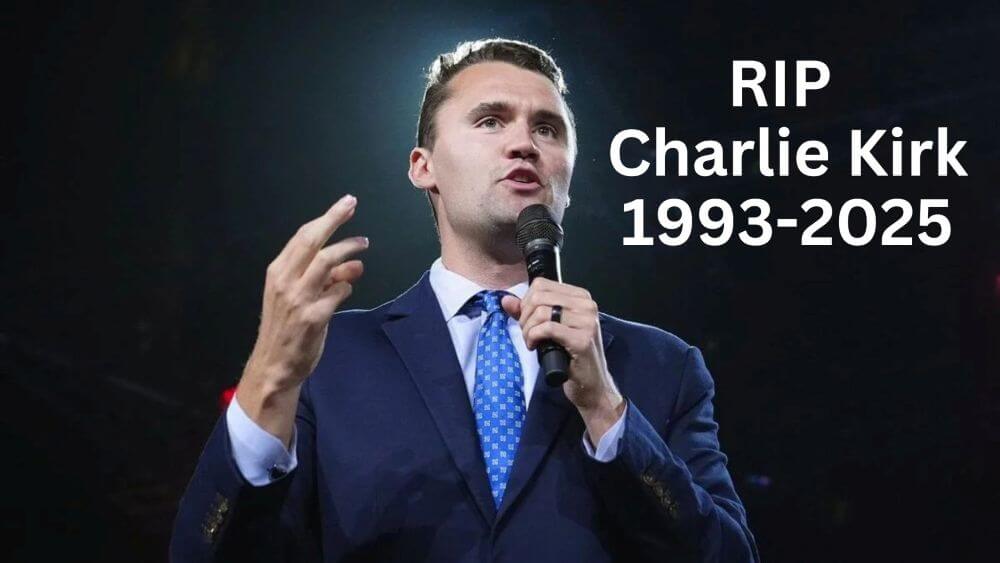
Charlie Kirk, Charlie Kirk assassination, Charlie Kirk legacy, Turning Point USA, Charlie Kirk Utah Valley University, political violence, Tyler Robinson, Charlie Kirk speech, conservative politics, free speech, US politics, Donald Trump, Charlie Kirk death, Charlie Kirk tribute
Charlie Kirk was more than just a conservative activist. He was a force of nature among young people; a speaker, a debater, a provocateur who believed deeply in free speech, in meritocracy, in the American experiment. At 31, he had already shaped the political conversations on college campuses, sparked controversy, drawn sharp criticism — but also inspired a generation.
From Humble Beginnings to National Platform
- Kirk founded Turning Point USA when he was only 18. He dropped out of college to pursue what he saw as a mission: to organize students around conservative values — free markets, small government, individual responsibility. Turning Point USA grew into a nationwide presence.
- He was known for his signature style: bold statements, confrontational debates, a refusal to back down in the face of criticism. Whether you agreed with him or not, Charlie knew how to command attention.
- His “Prove Me Wrong” tables and tours — particularly the “American Comeback Tour” — were built around direct engagement: challenging audiences, inviting opposition — sometimes antagonism — but always public, always visible.
September 10, 2025: The Day It All Changed
On Wednesday, September 10, Charlie Kirk was speaking at Utah Valley University in Orem, Utah. The event was part of his tour, drawing about 3,000 students and attendees. He was delivering a public speech, engaging with the crowd — in his characteristic style.
Then, just about 20 minutes into the event, tragedy struck. A single shot rang out from a rooftop building some distance away. Kirk was hit — reports say in the neck. He was rushed to hospital. By late afternoon, he was declared dead. The nation was stunned.
Law enforcement quickly characterized this as a targeted political attack — a sniper from a rooftop, a single shot, planned.
Aftermath: Shock, Debate, & Division
The killing has already ignited a firestorm of reaction:
- Conservative leaders and Donald Trump condemned the attack in the strongest possible terms, calling it an assassination, a cowardly act, an attack on free speech and political engagement.
- Critics and political adversaries — while also expressing sympathy — have warned about the dangers of villainizing rhetoric on all sides. The event intensified concerns about rising political violence in America, especially in a time of fierce polarization.
- Media outlets, universities, security experts have begun asking hard questions: How was this possible at a campus event? What are the security failures? Are public figures and organizers properly protected? How do we prevent this kind of political violence from becoming more common?
The Search — And The Suspect in Custody
For over 24 hours after the shooting, the suspect was at large. Authorities released surveillance photos and video showing a figure fleeing the rooftop.
Then, on September 12, Utah Governor Spencer Cox confirmed that a suspect has been taken into custody.
Here’s what’s known so far:
- The suspect is Tyler Robinson, aged 22, a Utah resident.
- Robinson reportedly confessed to a family member, who passed the information to law enforcement. This led to his being located and arrested.
- Authorities have not yet made public the full motive. Many are watching whether this will be treated as a hate crime, political extremism, personal radicalization, or something else entirely.
- The weapon is believed to be a bolt-action rifle. Evidence collected includes the firearm, surveillance video, shoe/palm prints on the rooftop.
His Legacy, At What Cost?
Charlie Kirk’s death is already being mourned as the loss of a champion for conservative youth. But beyond politics, his legacy raises deeper questions about the American experiment:
- What happens when political disagreements escalate from debate to violence?
- What responsibility do public figures, media, institutions have in setting tone — not just in words but in how we treat those with whom we disagree?
- Can a democracy survive in which fear becomes a part of public speech, and speaking in public becomes dangerous?
Kirk believed in the power of individual voices, the dignity of free speech, and the idea that ideas — truth — could win in open argument. Many of his supporters will say he died standing for that. And many of his critics will warn that this moment forces everyone to reflect: on rhetoric, on civility, on what it means to coexist in a deeply divided society.
What Comes Next
- A full investigation: charges, motive, trial. If the motive turns out to be political, ideological, or otherwise, this may become a defining case in modern U.S. history about political violence.
- Conversations on campus safety, free speech protections, security at public events. Universities will be under pressure to show they can protect both attendees and speakers.
- Political fallout: how people of all persuasions respond will matter. Will there be calls for calm, unity, restraint — or more finger-pointing? Will legal reform or social norms shift as a result?
Conclusion
Charlie Kirk lived large: provocative, passionate, controversial, and meaningful. His rise from a teenager starting a conservative student group to a national figure was swift. His influence was real. And now his death has become a symbol — of both the power of political activism, and the danger that comes when civic life, disagreement and public discourse are marked by hatred and division.
As America mourns, it must also reckon. For legacy is not just what one builds in life, but what one teaches us in death. May this tragedy be a turning point — not toward more violence, but toward more understanding, more care, more united protectors of what the country promises for all.
Other Self Made Posts