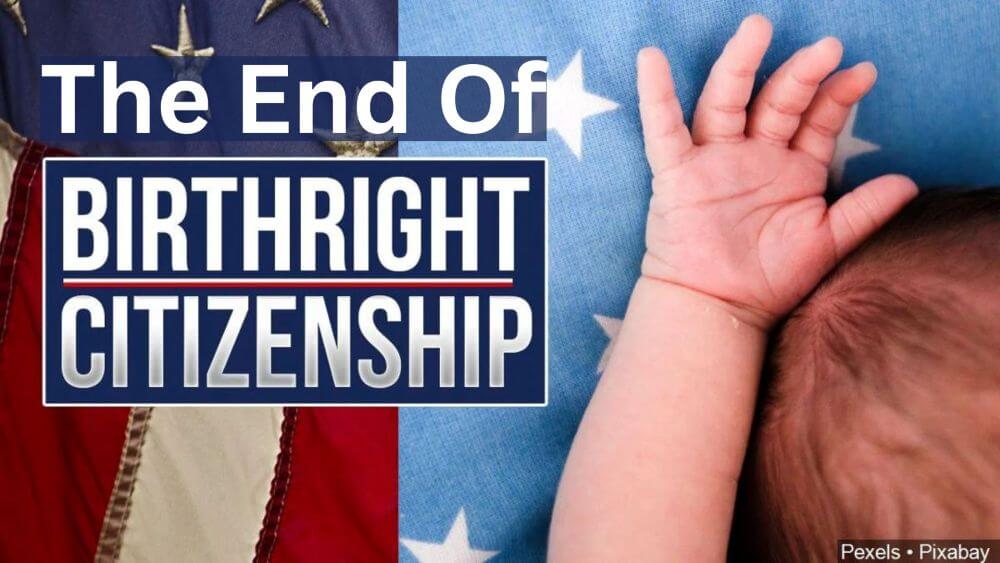
The End of Birthright Citizenship: A Step Toward Fiscal Responsibility and Sovereign Integrity
On January 20, 2025, President Donald Trump signed a bold executive order aimed at restricting birthright citizenship—a policy long criticized by fiscal conservatives and immigration reform advocates. This move is not just about immigration; it’s about sovereignty, fairness, and the unsustainable financial burden placed on American taxpayers.
Understanding the Policy
For over a century, the United States has recognized jus soli—the principle that anyone born on U.S. soil automatically becomes a citizen. While this may have made sense in a different era, in today’s globalized and highly mobile world, it has become a magnet for abuse. The result? An immigration loophole that has been financially and socially exploited on an industrial scale.
A Costly Loophole
As policy advisor Stephen Miller sharply put it, birthright citizenship has become “the biggest, costliest scam in financial history.” Consider the implications: an individual can enter the U.S. illegally or on a tourist visa, give birth to a child, and that child automatically becomes a U.S. citizen. That child, in turn, serves as the anchor for the entire family to gain legal footholds—and access a wide range of taxpayer-funded benefits.
Over time, these families may become eligible for public housing, food stamps, Medicaid, and educational benefits—essentially turning a loophole into a lifetime financial commitment for U.S. taxpayers.
Fiscal Fairness for Citizens
This policy shift isn’t about denying compassion—it’s about redefining fiscal responsibility. In a country where working-class Americans are struggling to make ends meet, and national debt is measured in the tens of trillions, does it make sense to continue offering automatic citizenship to the children of people who are not legally authorized to be here?
By narrowing the definition of citizenship, this executive order aims to prioritize legal residents and citizens, and ensure that scarce public resources are directed where they’re needed most: toward American families who have contributed to the nation’s social and economic fabric.
Restoring Sovereignty and Common Sense
Opponents of the executive order argue that it undermines the 14th Amendment. But legal scholars note that the phrase “subject to the jurisdiction thereof” was never intended to apply to foreign nationals or those in the country illegally. The executive order invites a long-overdue national conversation about what citizenship should mean in the 21st century.
According to the 14th Amendment of the U.S. Constitution:
“All persons born or naturalized in the United States, and subject to the jurisdiction thereof, are citizens of the United States…”
This means anyone born in the U.S. automatically becomes a U.S. citizen, even if their parents are undocumented immigrants.
Conclusion
The elimination of birthright citizenship is not just a political maneuver—it’s a course correction. A nation cannot long endure when its laws invite exploitation and its generosity is used as a loophole. President Trump’s action is a courageous step toward restoring fiscal discipline, protecting American workers, and reaffirming that citizenship is not a right granted by geography, but by allegiance and legality.
Whether you agree or disagree, one thing is clear: the conversation about who we are as a nation—and who we choose to welcome—is far from over.
Previous opinion posts