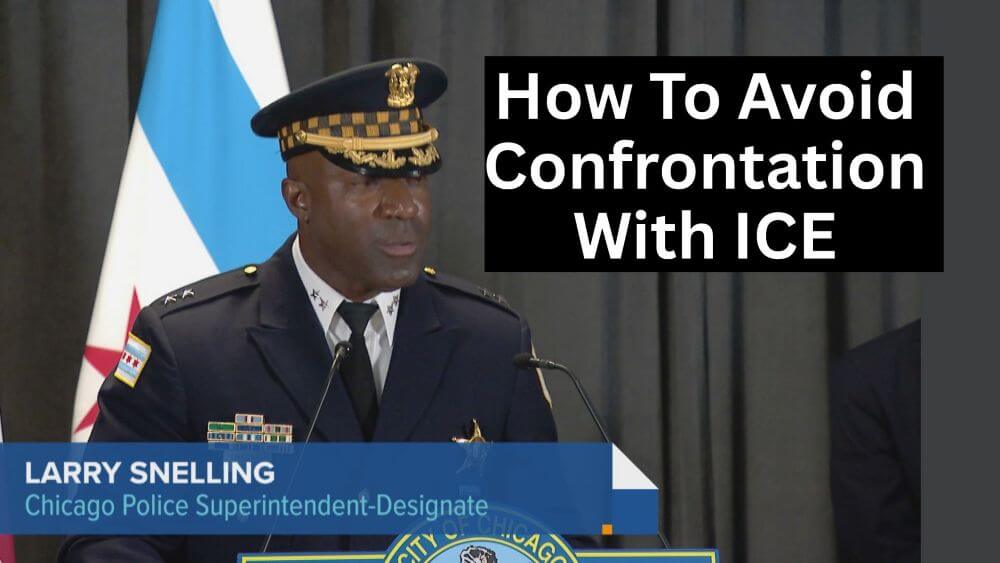
In today’s polarized environment, avoiding law enforcement confrontation is more important than ever for the safety of our communities. Emotions often run high when citizens encounter federal agencies like ICE or HSI, but it is critical to distinguish between protected speech and dangerous, illegal interference.
Chicago Police Superintendent Larry Snelling recently addressed this issue directly, emphasizing that public safety relies on understanding the legal boundaries of these interactions. His guidance provides a clear framework for how citizens should behave to prevent potentially deadly escalations.
Understanding the Risks of Interference
When emotions are high, it can be tempting to intervene or protest in ways that feel impactful. However, law enforcement officials have specific training and legal protections. When those lines are crossed, the situation can escalate rapidly.
Superintendent Snelling’s October 2025 press conference provided a sobering reality check. He made it clear that federal agents, including those from ICE and HSI, are authorized law enforcement officers.
According to his guidance, certain actions are viewed as clear threats:
- Boxing in vehicles: Using personal vehicles to surround or obstruct law enforcement cars.
- Pursuit: Intentionally following law enforcement agents, which they may interpret as preparation for an ambush.
- Ramming: Using a vehicle to strike a law enforcement vehicle.
The Legal Definition of Deadly Force
It is vital for every citizen to understand that “deadly force” is a legal classification, not just a subjective term. Superintendent Snelling explained that any action capable of causing serious bodily harm or death meets this threshold.
If you intentionally drive your vehicle into one occupied by law enforcement, you are using deadly force. Under the law, officers are authorized to respond to such threats with their own use of deadly force to protect themselves and neutralize the danger.
How to Maintain Safety During Encounters
The goal of any interaction with law enforcement should be safety for all parties involved. You do not have to agree with an officer’s actions, but you must respect the legal boundaries that keep the situation from becoming a crime.
Consider these steps to maintain safety:
- Maintain Distance: Never attempt to “box in” or obstruct a law enforcement vehicle.
- Avoid Pursuit: Do not follow agents. This creates a volatile environment and raises immediate, dangerous questions about your intent.
- Respect Authority: Understand that local police departments have a mandate to not interfere with federal agents performing their duties.
- Stay Calm: While you may be upset, committing a crime is not a valid way to protest.
Conclusion
We cannot become a society where individuals take the law into their own hands. Prioritizing avoiding law enforcement confrontation is the best way to ensure that protests or disagreements do not turn into tragic, fatal incidents. Always remember that your safety, and the safety of officers, depends on clear, lawful conduct.
Frequently Asked Questions (FAQ)
Q: Is it illegal to follow federal agents? A: Following law enforcement agents is highly discouraged. It forces officers to treat you as a potential threat and can lead to immediate escalation or charges of interference.
Q: Can I protest against ICE or HSI? A: While you have the right to express your views, you do not have the right to break the law. Interference, obstruction, or using vehicles to box in agents is illegal.
Q: What should I do if I disagree with an officer’s actions? A: The appropriate way to address concerns is through legal and political channels, such as filing complaints or participating in organized, non-violent civic activities, rather than engaging in physical confrontation.
Other Law Posts
Leave a Reply