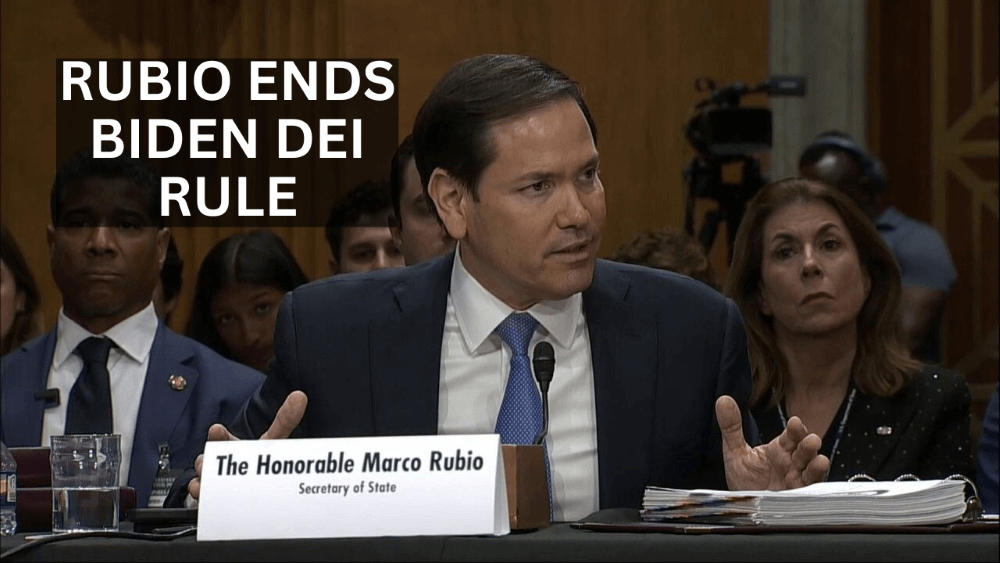
Secretary of state Marco Rubio, just reversed one of the more controversial Biden-era DEI mandates—one that quietly, but significantly, shaped promotions inside the department. And for nearly 300 employees, his decision wasn’t just symbolic. It changed their careers.
The Rule That Should’ve Never Been There
Under the previous administration, foreign service employees were evaluated on whether they would “seek diversity in staff.” Sounds harmless, right? But this wasn’t guidance. It was a requirement—one that factored into promotions.
In practice, it became a bureaucratic trapdoor. Almost 300 people saw their career trajectories stall, not because of poor performance, but because they didn’t check a mandated DEI box the “right” way. Real people. Real missed opportunities. Real consequences.
So Rubio’s team dug in. They reviewed the records. And what they found was exactly what critics of politicized HR processes have been warning about: a system that prioritized ideology over fairness.
Rubio Hits the Reset Button
The result?
- Back pay for those hit by the rule
- Administrative promotions to restore lost career progress
- Letters of commendation acknowledging they were unfairly penalized
Roughly 295 employees are now getting their professional dignity back.
Some insiders say it’s long overdue. Others say it’s political. But here’s the truth: if an employee’s career was harmed by a subjective ideological checkbox, fixing it isn’t politics—it’s justice.
A Tiny Checkbox, a National Debate
It’s amazing how something so mundane—a single HR checkbox—became another front in America’s ongoing culture war. But that’s where we are.
The U.S. government should be pursuing competence, excellence, and merit. Not ideological purity tests disguised as performance metrics.
Rubio’s message was simple:
Fix the hit and move on.
But of course, Washington never just “moves on.” This decision is already being framed as a broader shift: a Trump-Rubio foreign policy team rolling back equity-focused policies and returning to what they call “neutral governance.”
Whether you cheer or boo that depends on your politics. But here’s my take:
Fairness Means Treating Employees as Professionals—Not Ideological Foot Soldiers
If someone is great at their job, promotes effectively, and serves the country well, why should their career hinge on whether they wrote the right paragraph about office diversity?
Policies like that don’t create fairness.
They don’t create inclusion.
They create resentment, distrust, and division.
Restoring fairness isn’t about dismantling diversity—it’s about removing ideological pressure from processes that should be based on performance.
For 295 people at the State Department, fairness finally showed up.
And for the rest of the country, this is a reminder of something bigger:
Good government starts with common sense.
And sometimes, common sense begins by unchecking a box that never should’ve been there in the first place.
Previous Politics posts