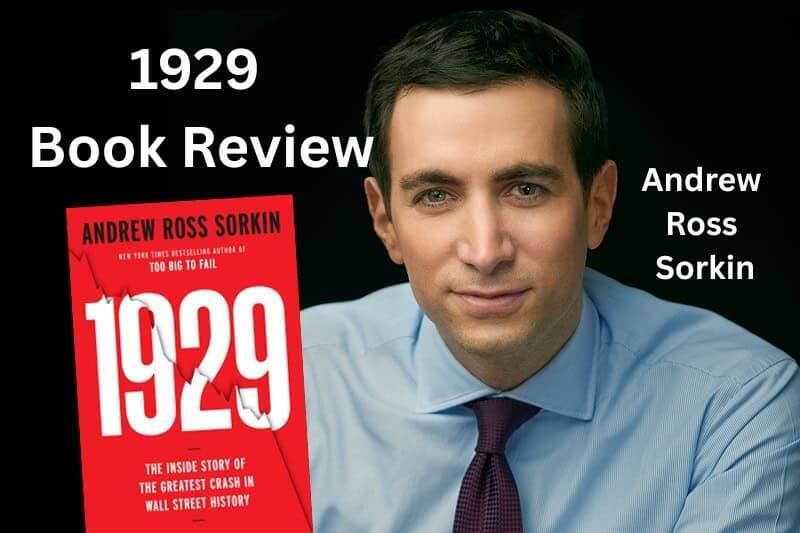
The year 1929 remains the ultimate boogeyman in the word of economy and finance. In his latest masterpiece, 1929: Inside the Greatest Crash in Wall Street History, Andrew Ross Sorkin moves beyond the dry statistics of the Great Depression to deliver a cinematic, character-driven autopsy of the most consequential financial collapse in American history.
Sorkin, the acclaimed author of Too Big to Fail, uses his unique access to historical records to reveal that the crash wasn’t just an economic inevitability. It was a human drama fueled by a toxic cocktail of innovation, leverage, and the seductive illusion that “this time is different.”
The Roaring Twenties: A Prelude to Disaster
The book opens in the final, euphoric months of the Roaring Twenties. At this time, stock prices were booming and credit was dangerously cheap.
Sorkin vividly paints a picture of a nation intoxicated by new technology. Just as we look at AI and blockchain today, the investors of the 1920s saw radio (RCA) and automobiles as the infinite frontier.
The companies that best represented the seculation, excess and the collapse of 1929 were:
1) Radio Corporation of America (RCA)
RCA was the poster child of the bubble.
- It was tied to the explosive growth of radio technology.
- Investors bid it up to absurd levels despite the company paying no dividends.
- Its stock soared from around $85 in early 1928 to over $500 in 1929.
- After the crash, it collapsed by nearly 90%.
If you want a symbol of speculative mania detached from fundamentals, RCA is it.
2) General Motors (GM)
GM represented industrial America at its peak.
- One of the largest and most admired corporations in the world.
- Widely held by investors who believed U.S. industrial growth was unstoppable.
- When the crash hit, even blue-chip giants like GM fell dramatically.
GM shows that this wasn’t just a fringe tech bubble — the core of American industry was dragged down too.
3) National City Bank
One of the largest banks of the era (later became part of Citibank).
- Actively promoted stock speculation.
- Extended margin loans to investors.
- Became entangled in the collapse when borrowers couldn’t repay.
This bank represents the financial leverage and easy credit that magnified the crash.
If you step back, here’s the pattern:
- RCA = speculative euphoria
- GM = mainstream confidence
- National City Bank = leverage and systemic risk
That combination — hype, belief in permanent prosperity, and borrowed money — is what made 1929 so devastating.
The Myth of the Rational Investor
One of the most striking takeaways from 1929: Inside the Greatest Crash in Wall Street History is how widespread speculation became. Brokerage houses began appearing on street corners like modern-day Starbucks.
Ordinary citizens were lured into the market with 10:1 leverage. You could put down $1 to control $10 worth of stock. This made the market’s ascent feel unstoppable, but it also meant that a 10% dip would wipe out an investor’s entire equity.
Why 1929: Inside the Greatest Crash in Wall Street History is Relevant Today
As a book reviewer for AlainGuillot.com, I look for patterns that repeat across centuries. Sorkin’s narrative highlights regulatory gaps that feel eerily familiar to the 2008 crisis and the “meme stock” era of the 2020s.
The Role of Leverage
Sorkin argues that the crash wasn’t just about panic selling. It was a liquidity story.
When prices began to slip, banks issued margin calls. Investors didn’t sell because they wanted to; they sold because they were forced to.
This leverage-driven collapse mirrors the subprime mortgage crisis. While the underlying assets (homes in 2008, radio stocks in 1929) had long-term value, the debt used to buy them created a house of cards.
The Great Characters of the Era
Sorkin excels at bringing historical figures to life. He focuses on the “philosopher kings” of the time:
- John Raskob: The “Elon Musk of his time,” who ran General Motors and built the Empire State Building. He famously claimed “everybody ought to be rich.”
- Herbert Hoover: Often maligned by history, Sorkin portrays him as a man who tried to “jawbone” the country into optimism while making critical policy errors.
- Richard Whitney: The face of the Wall Street establishment who attempted to halt the crash with a heroic (but ultimately futile) purchase of U.S. Steel shares.
The Battle Between Wall Street and Washington
A central theme of 1929: Inside the Greatest Crash in Wall Street History is the friction between financiers and regulators. Sorkin uncovers documents showing that the Federal Reserve was paralyzed by its own history.
The Fed had been blamed for a brief recession in 1920 after raising rates. By 1929, they were terrified of “tipping the economy” again, so they sat on their hands while speculation spiraled out of control.
The Glass-Steagall Controversy
Sorkin provides a fascinating look at the origins of the Glass-Steagall Act. While often viewed as a “pure” piece of regulation to protect the public, Sorkin reveals a darker side.
He suggests the bill was partly weaponized by the Rockefeller family to undermine their competitor, J.P. Morgan. This nuanced view challenges the standard “Main Street vs. Wall Street” narrative.
Key Lessons for Modern Investors
What can we learn from the wreckage of 1929? Sorkin’s research points to three main pillars:
- Psychology Trumps Logic: In a boom, even the most brilliant minds (like economist Irving Fisher) fall victim to the belief in a “permanently high plateau.”
- Policy Matters: The transition from a market crash to a “Great Depression” was accelerated by the gold standard and a lack of deposit insurance.
- The Debt Trap: Total debt as a percentage of GDP wasn’t the only issue; it was the distribution of debt among individual speculators.
Additional lesson: The stock market always recovers. Anyone who would have held their stock for the following years, would have a nice profit.
The stock market outperforms every other asset class
Despite the immediate devastation of the 1929 crash, the long-term historical data reveals a surprising resilience in American equities. While the initial collapse was catastrophic, an investor who bought at the absolute peak in 1929 would have reached their break-even point approximately 25 years later, in 1954, when accounting for reinvested dividends. By the 30-year mark, that same investment would have significantly outperformed both cash and government bonds, yielding a real return of roughly 6%. This serves as a profound lesson in market endurance: even when navigating the darkest chapter in financial history, the stock market ultimately maintained its trajectory as a superior vehicle for wealth creation compared to other asset classes.
Summary of the Economic Impact
The aftermath of the crash was not a straight line to ruin. It was a series of dominoes.
- Bank Failures: Over 9,000 banks failed by 1933.
- Unemployment: Reaching a staggering 25% at its peak.
- Social Upheaval: A generational shift in how Americans viewed risk and the stock market.
Critical Reception
The book has been a massive commercial success, becoming a #1 New York Times bestseller. Critics praise Sorkin’s ability to make complex financial history feel like a thriller.
However, some historians note that Sorkin focuses heavily on the “titans” of Wall Street. While this makes for great storytelling, it sometimes leaves the struggles of the “ordinary” person in the background until the final chapters.
Should You Read It?
If you are interested in finance, history, or psychology, this is a must-read. It provides a richer, more human picture of the crash than any textbook could offer.
Sorkin proves that while technology changes, human greed and fear remain constant. 1929: Inside the Greatest Crash in Wall Street History is more than a history book; it is a mirror.
Summary and FAQ
1929: Inside the Greatest Crash in Wall Street History is a definitive account of the birth of modern financial anxiety. Andrew Ross Sorkin masterfully weaves together the lives of bankers, politicians, and speculators to show how a “New Era” of prosperity crumbled into the Great Depression.
Frequently Asked Questions
What was the main cause of the 1929 crash according to Sorkin? While many factors contributed, Sorkin emphasizes the role of excessive leverage (margin trading) and a misplaced psychological belief in endless growth.
How does 1929 compare to the 2008 financial crisis? Both crises were fueled by debt and a lack of transparency. However, the 1929 crisis was worsened by the gold standard and the absence of a “lender of last resort” mindset at the Fed.
Is this book suitable for beginners in finance? Yes. Sorkin avoids dense jargon and focuses on a character-driven narrative, making it highly accessible to general readers.
What is the “John Raskob” connection in the book? Raskob is highlighted as a visionary who changed American culture by encouraging consumer debt to buy cars, which inadvertently helped fuel the speculative bubble in the stock market.